I think this is the first time since I have been creating travel blogs that I missed posting on the day. Yesterday my cousin Christine and her husband Eddie picked me up at my hotel and took me to a group of villages in Oxfordshire/Buckinghamshire which figure heavily in my family history. My maternal grandfather's ancestors came from these villages and I very much wanted to visit them. It was an amazing experience for me. I took a lot of photos, and it took me numerous hours to edit and organise them. It has taken me the best part of today (Day15) to write this up, sitting in the hotel lounge, tapping away on my laptop, filling in the family history detail. It is now 4 pm and I've been here since 10 am - so this is a two-day post!
Feel free to skip the whole post if family history bores you.
It was wonderful, as always, to see Christine and Eddie, both looking pretty well and dapper. They drove over from Cheltenham to take me out.
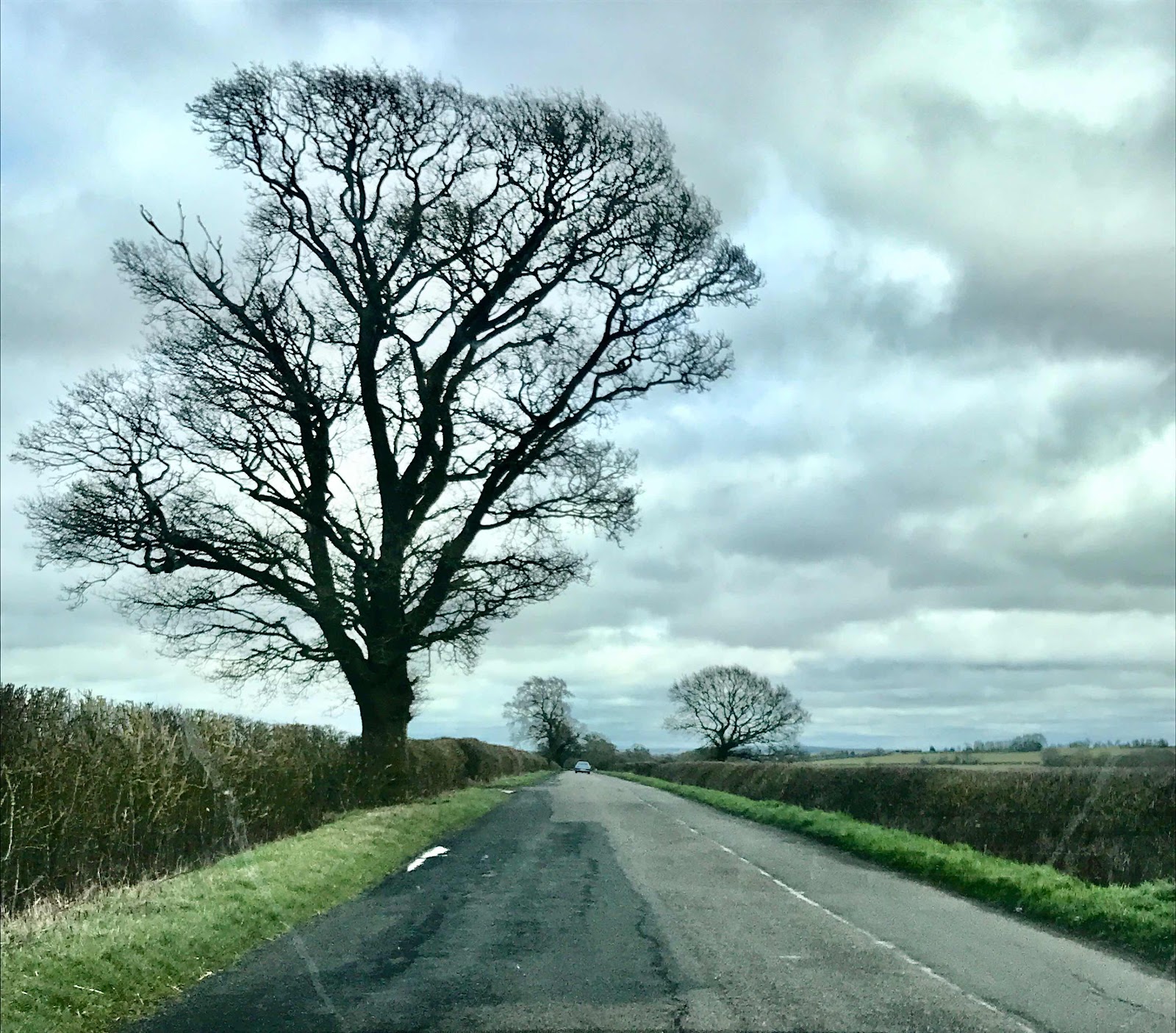
It was about an hour's drive to get to the Buckinghamshire villages.
My grandfather's name was Albert Edward Ray. Family story has it that the family originally came from France. If this is the case (and I have no evidence) it was with William the Conqueror, who gave his retainers the surname 'Roi' - belonging to the king - which translated into Ray in English. The other possibility is that the name came from the river.
Feel free to skip the whole post if family history bores you.
It was wonderful, as always, to see Christine and Eddie, both looking pretty well and dapper. They drove over from Cheltenham to take me out.
It was about an hour's drive to get to the Buckinghamshire villages.
My grandfather's name was Albert Edward Ray. Family story has it that the family originally came from France. If this is the case (and I have no evidence) it was with William the Conqueror, who gave his retainers the surname 'Roi' - belonging to the king - which translated into Ray in English. The other possibility is that the name came from the river.
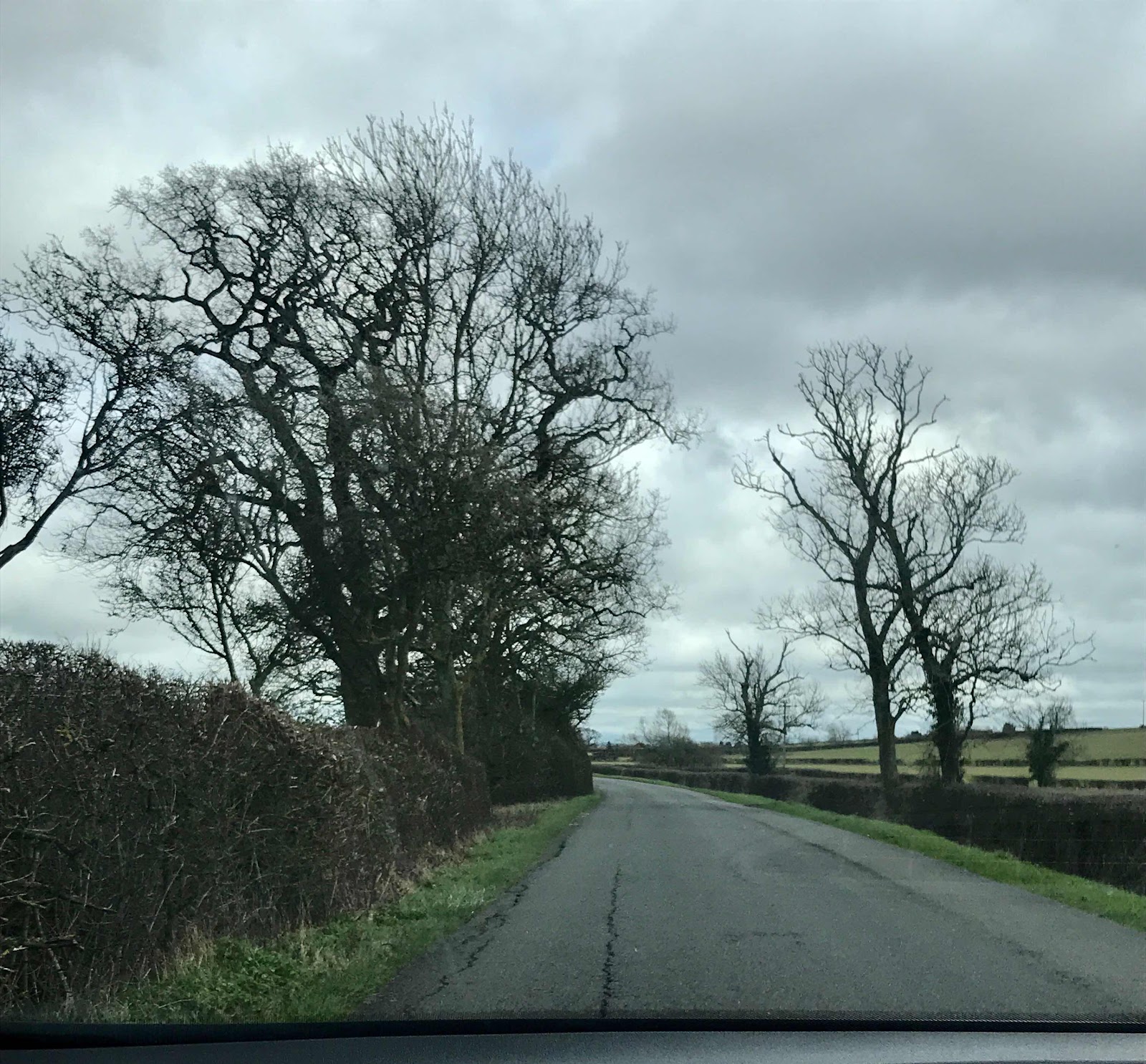
The landscape was surprisingly open and flat, with big skies and few farmhouses. It was very marshy with lots of water still lying around from the recent heavy rains.
To my surprise, the villages were within about a 10 mile radius of each other. I had not understood this from looking at a map in Australia.
I have ordered our visits in a chronological order of my ancestors' occupation, rather than the order in which we visited them to make sense of my family history.
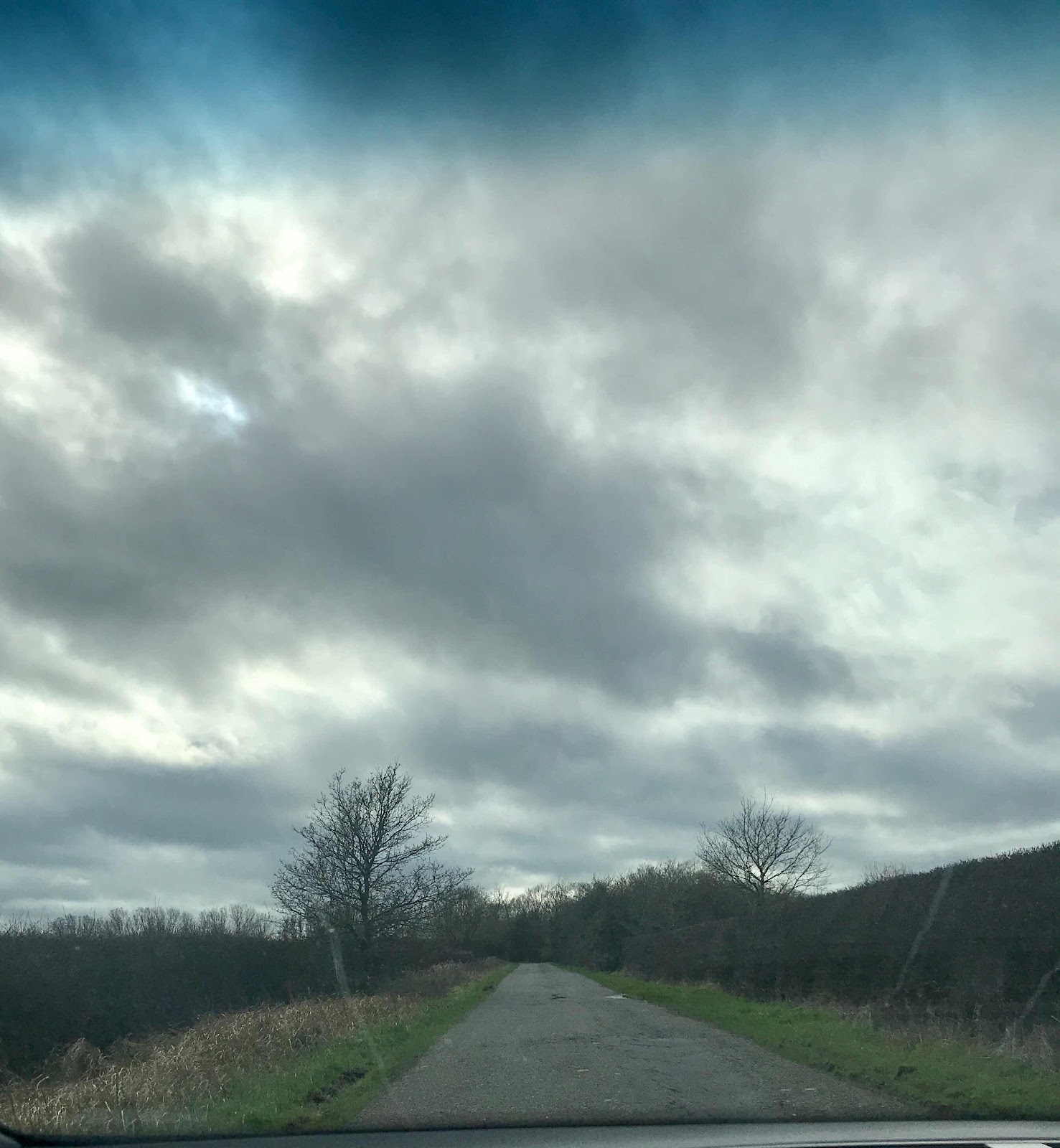 From this point of view, the story begins in Piddington, Oxfordshire. We approached this in the afternoon when the sun was trying to break through and the clouds made continuously changing patterns.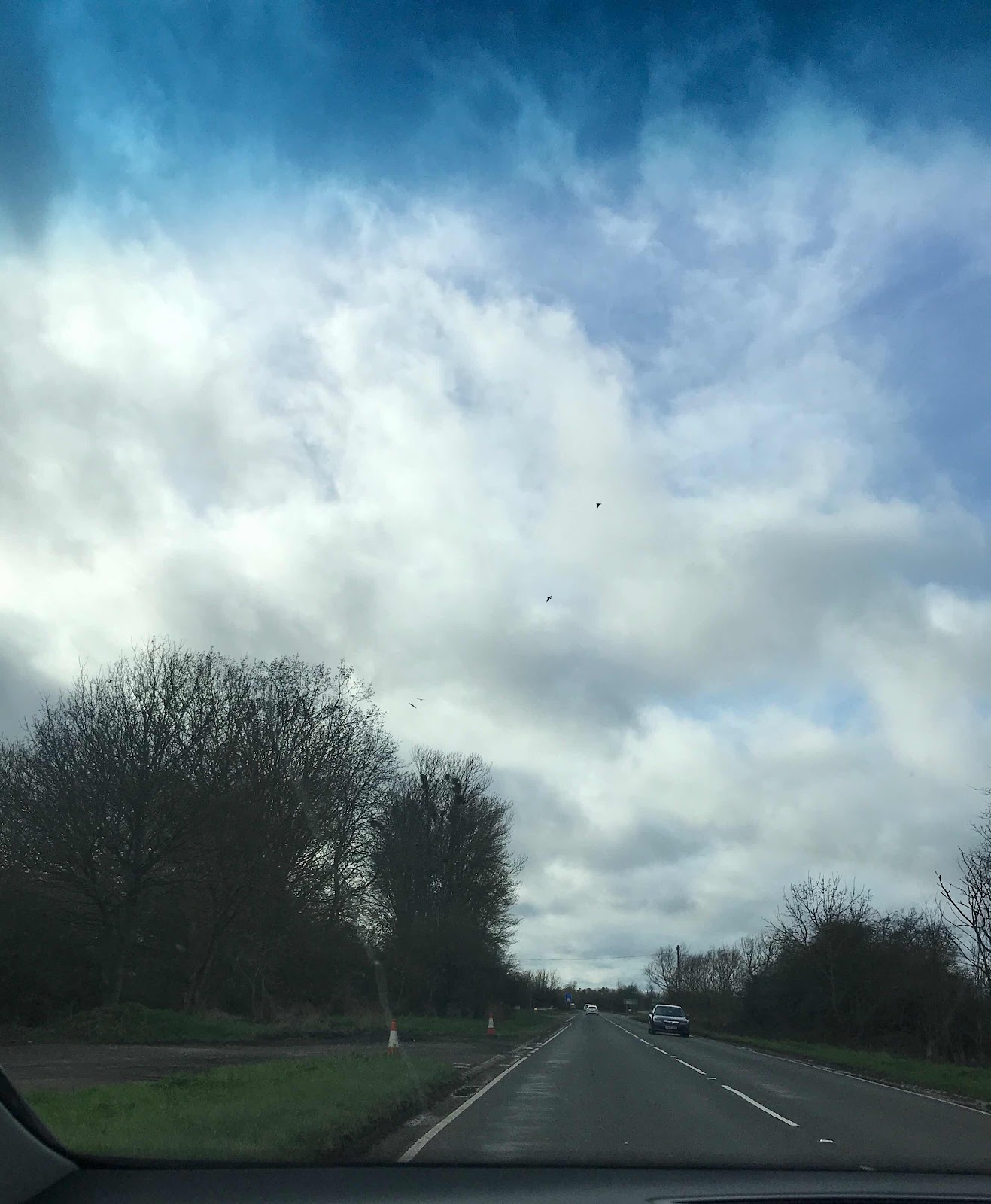
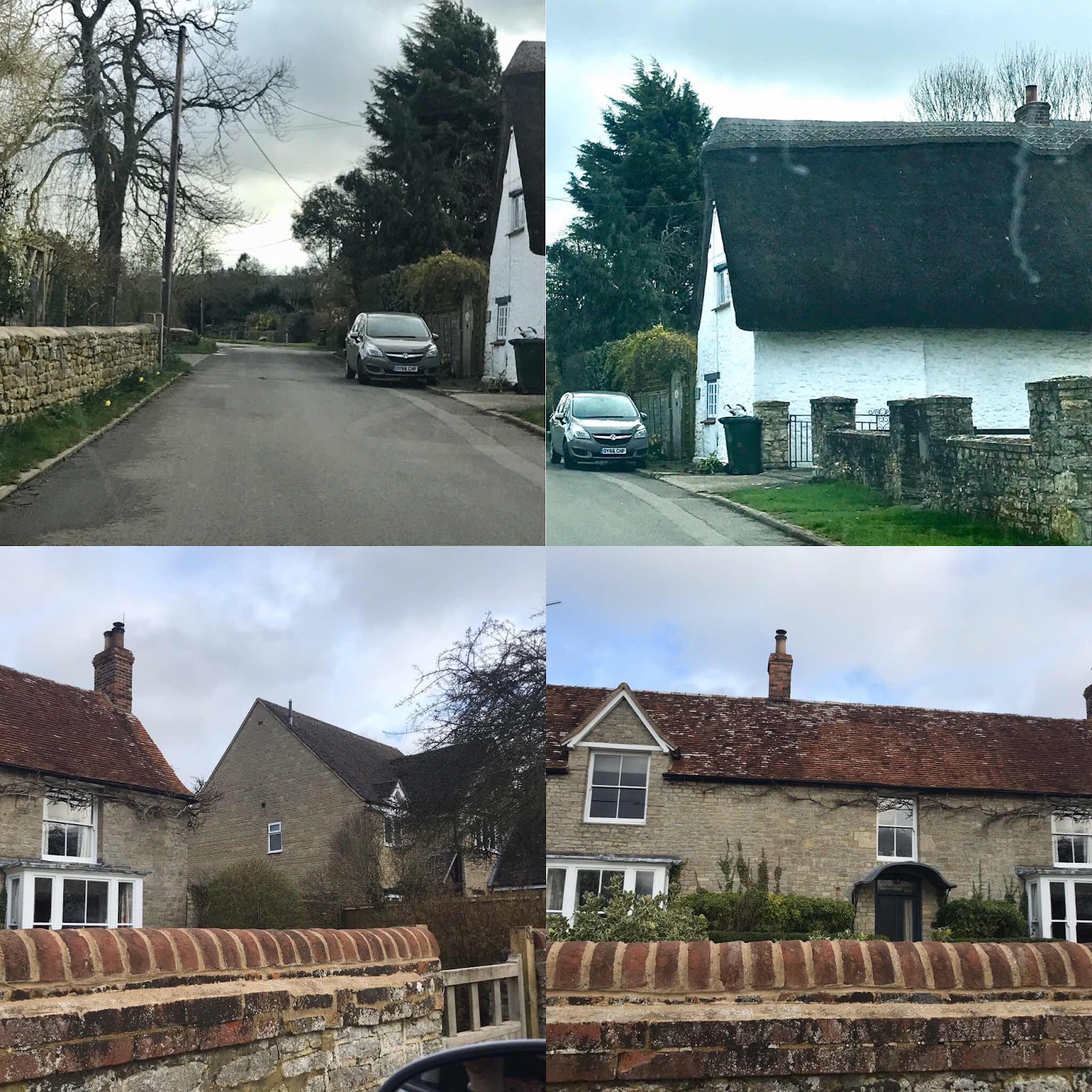
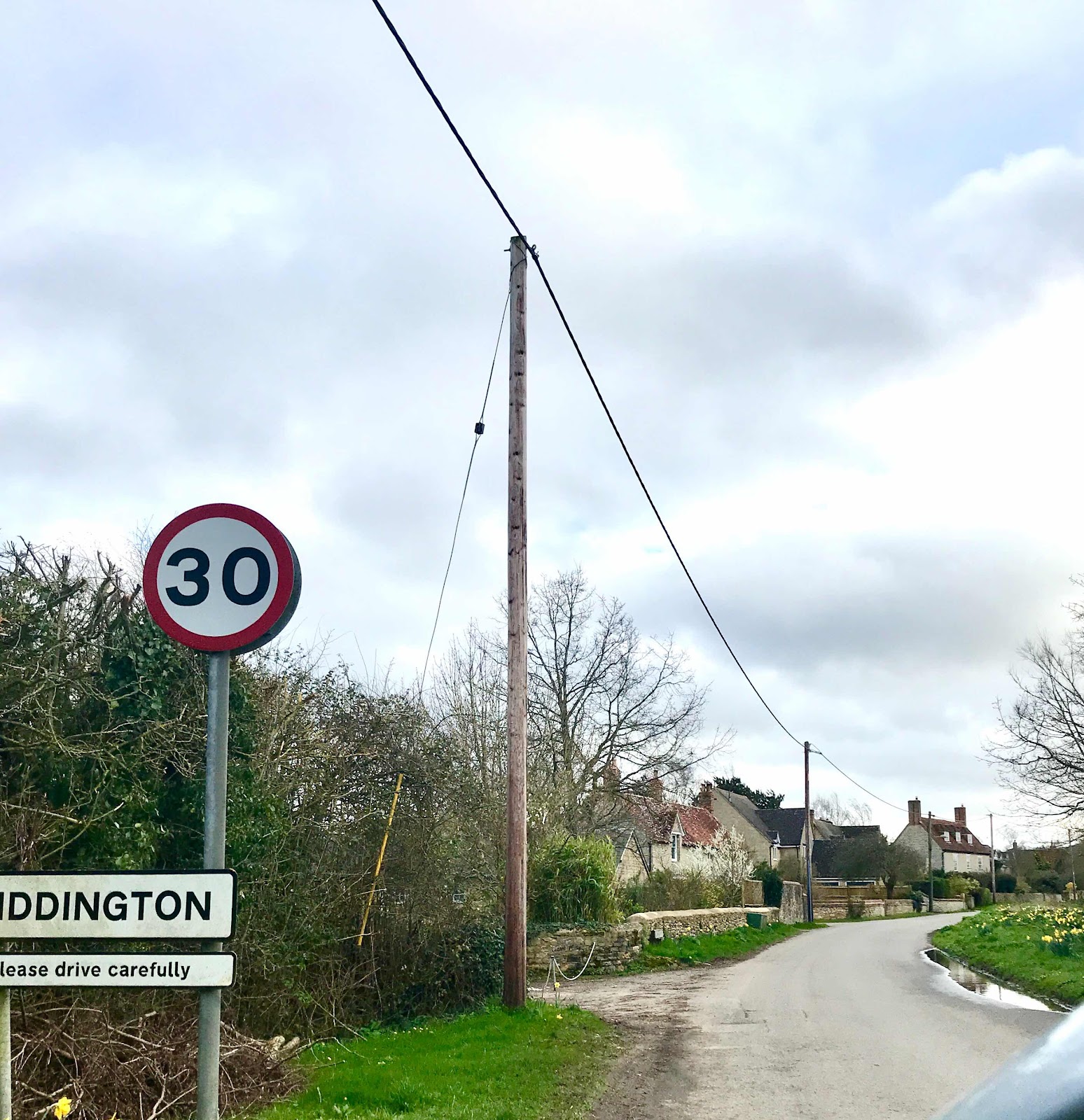
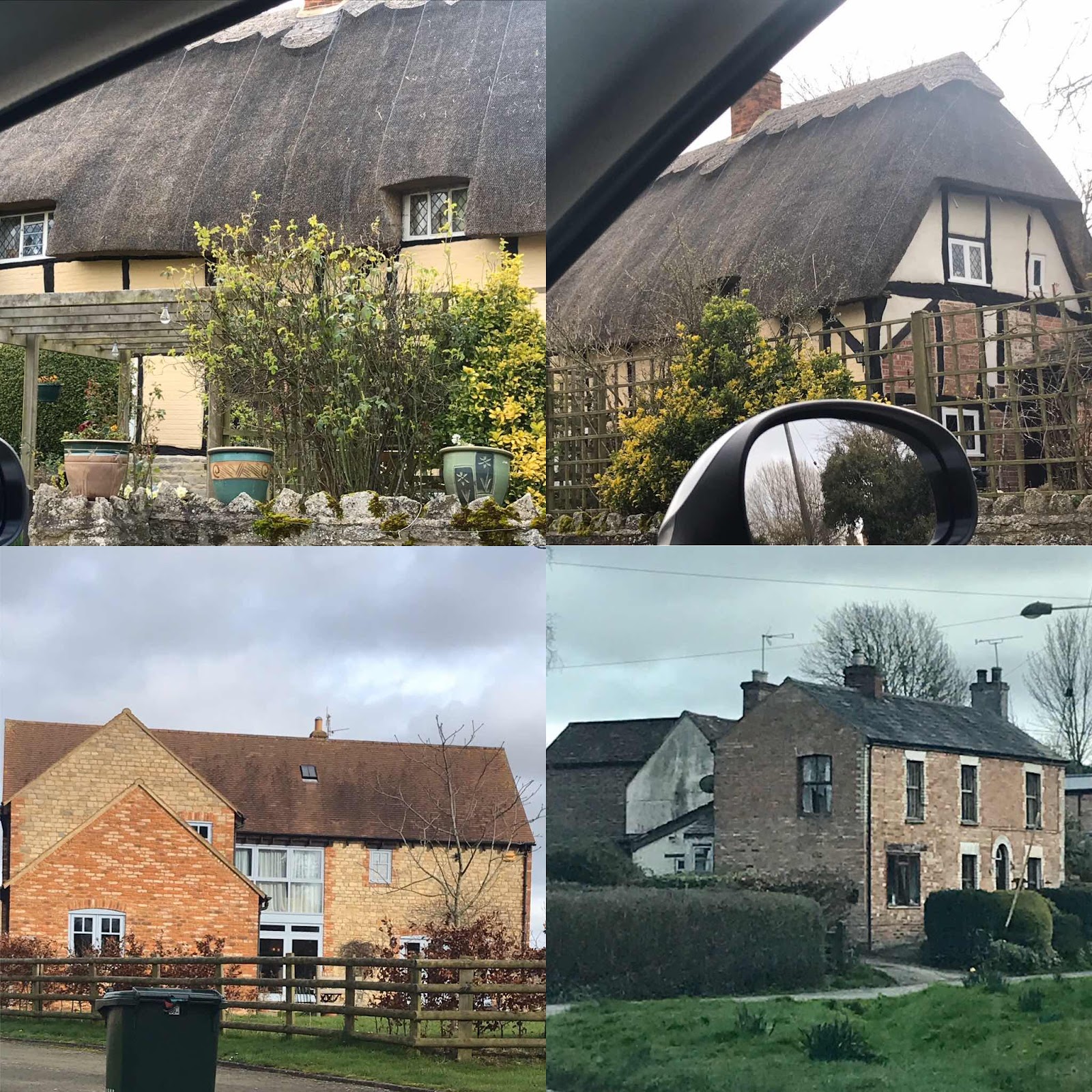
Piddington is a substantial village, with layers of housing from varying ages - but very different from when my 7x Great Grandfather, Thomas Ray was born here in about 1657, even if a few houses remained from that time..
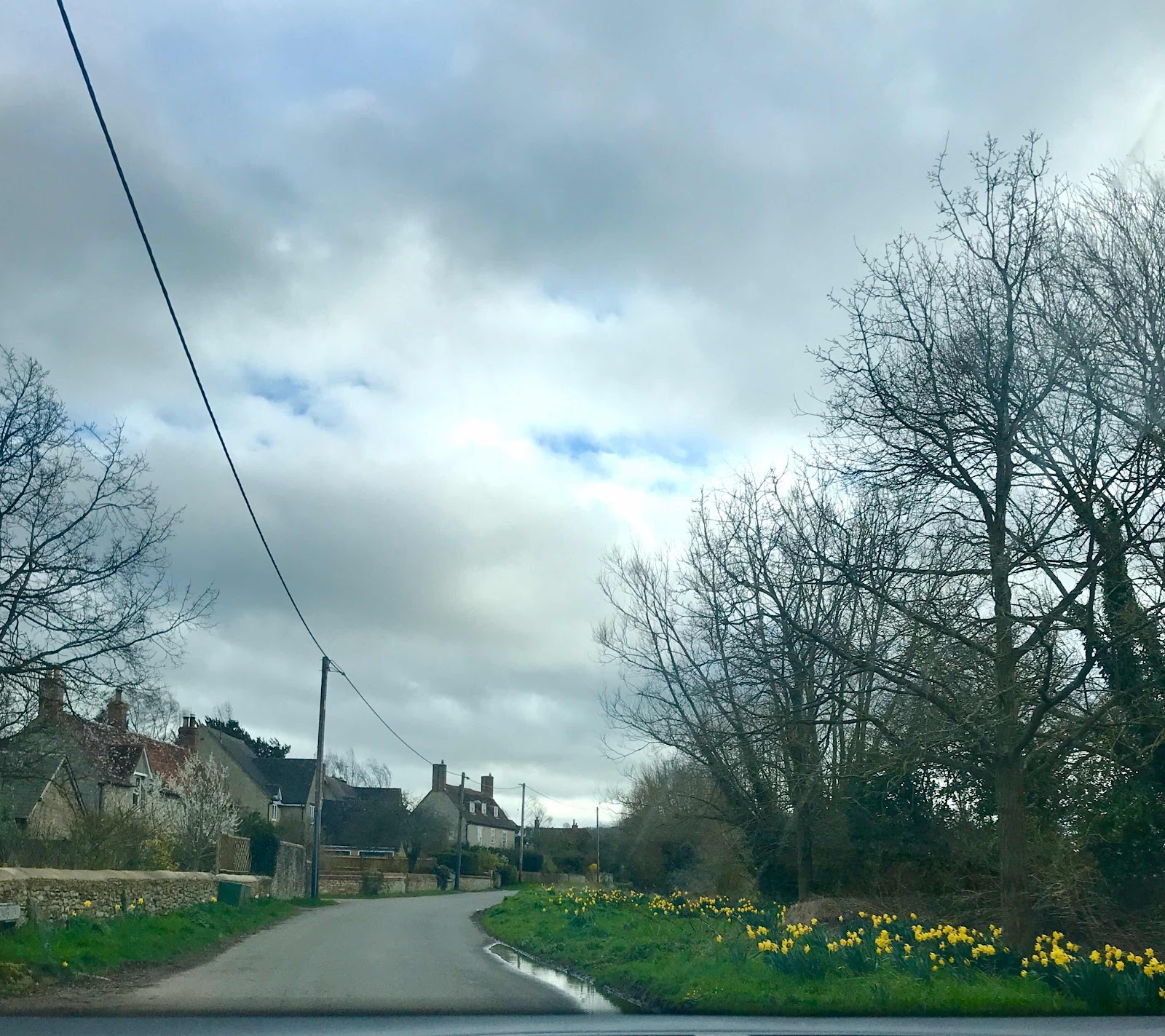
It was nice to see the daffodils out.

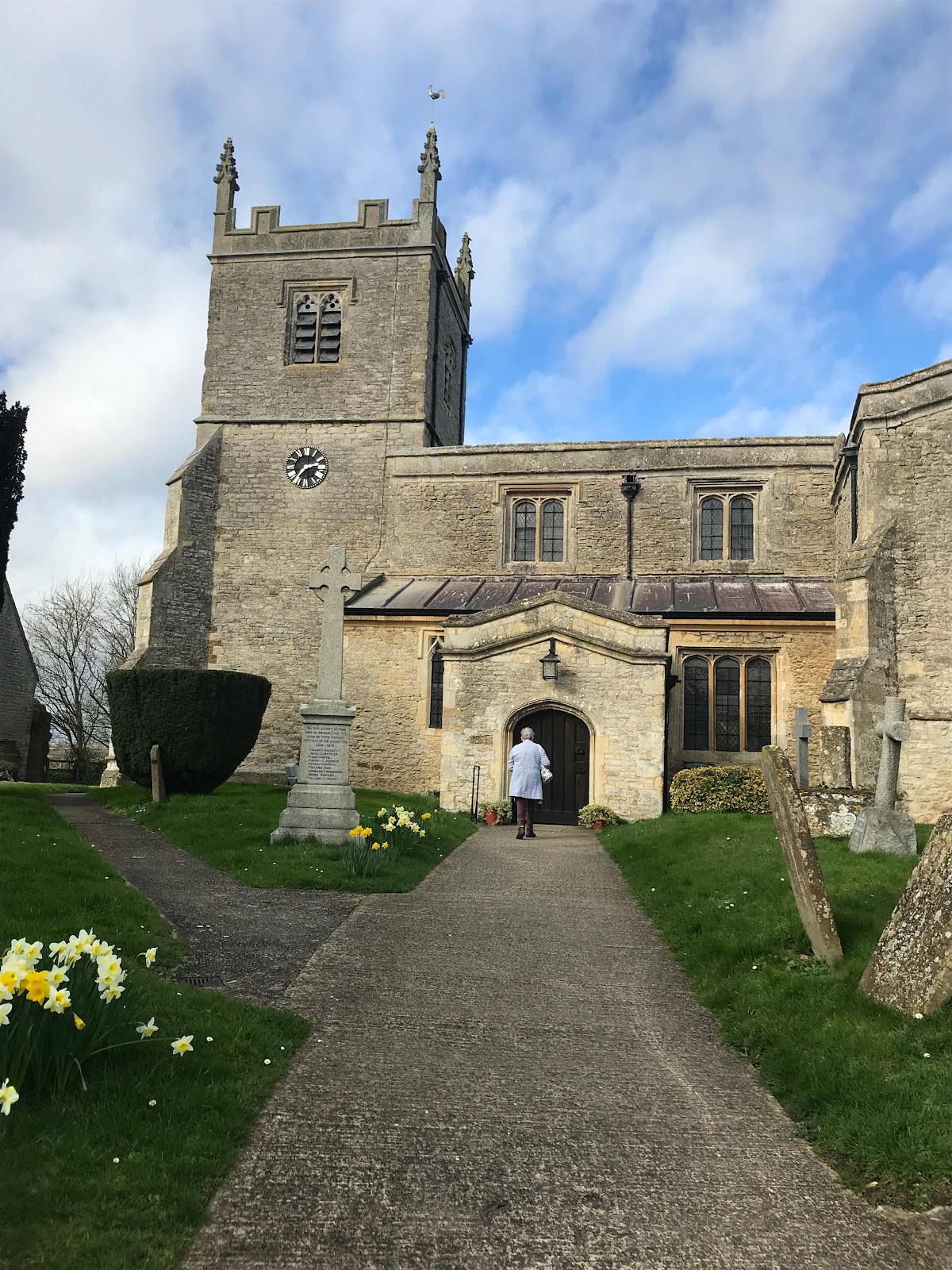
We made our way to the Church.
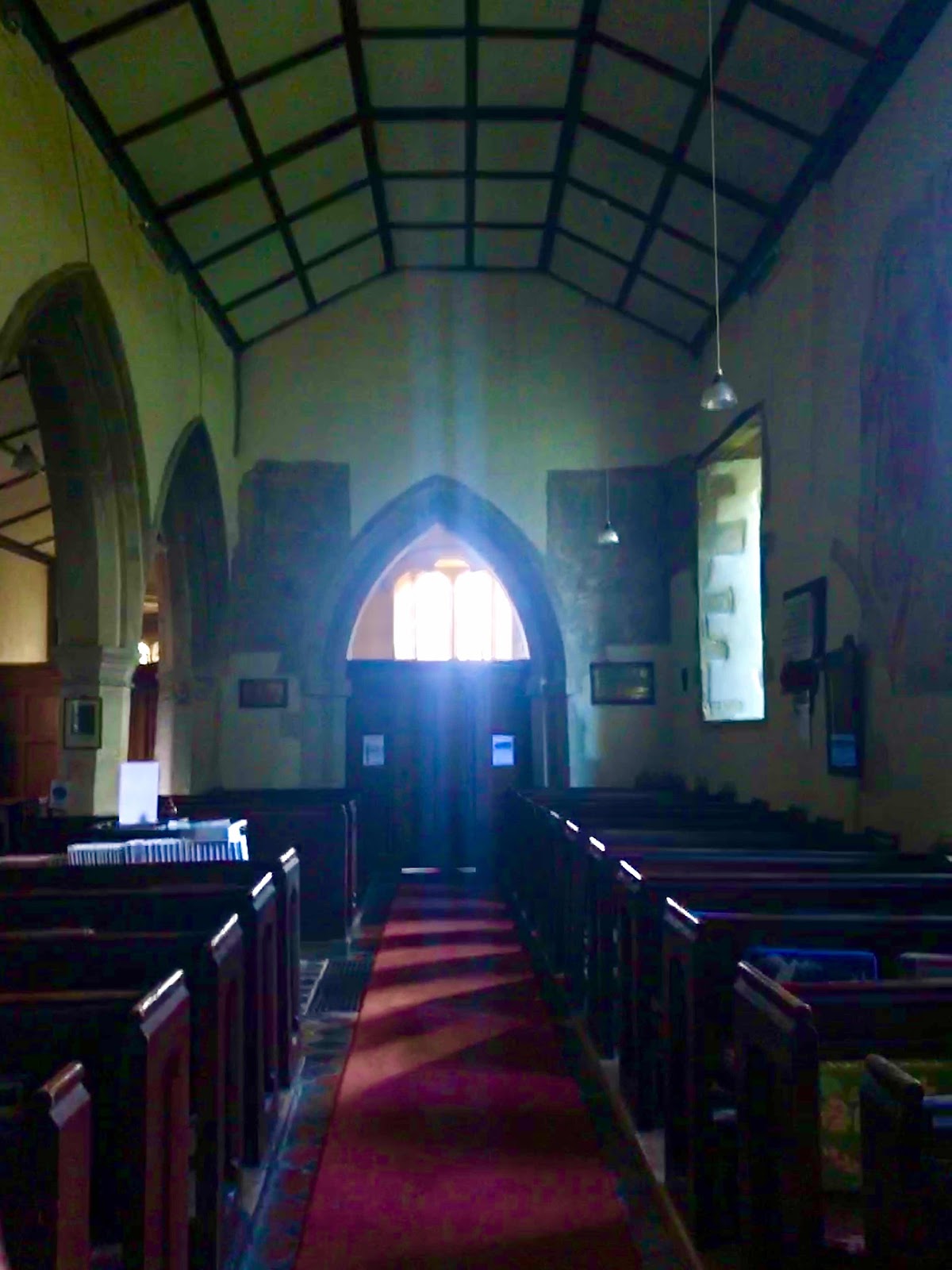
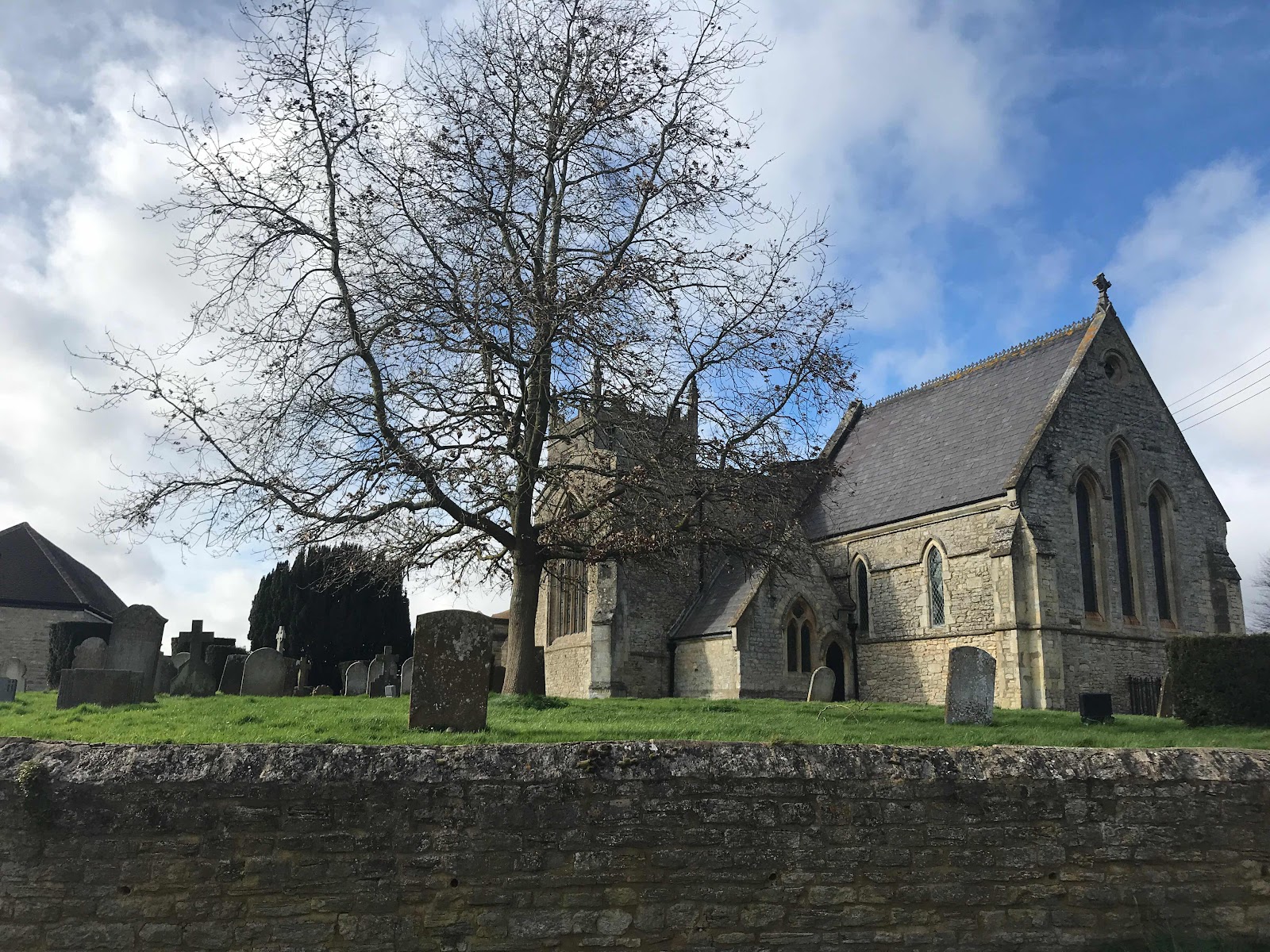
St Nicholas Piddington is quite a small, compact church with an entrance from the Eastern end, along the Southern side.
 There is a strange narrow door in the Southeastern corner, covered by a hanging on the inside.
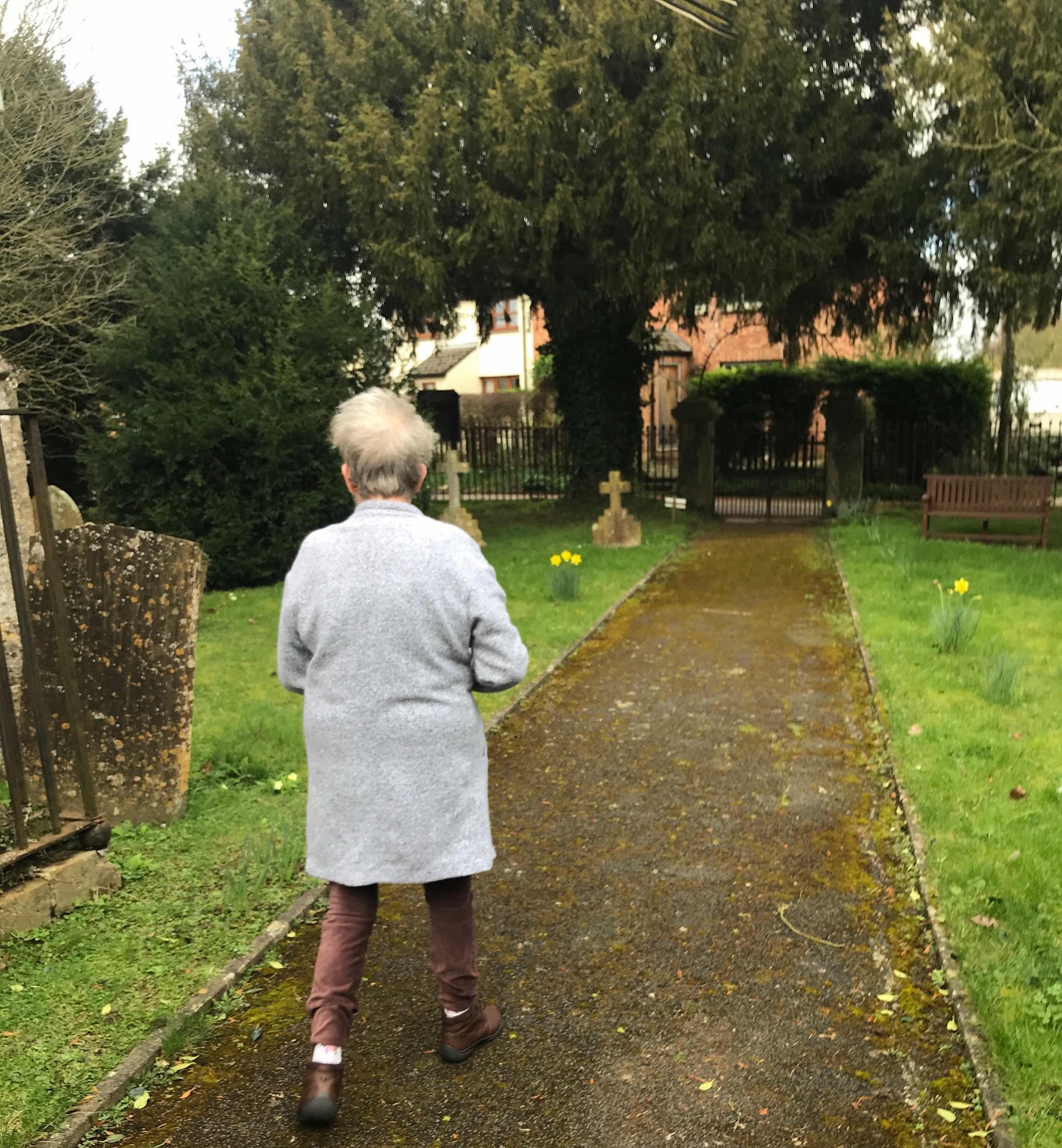
 The graveyard is well kept and headstones worn.
 I did not attempt to find evidence of Thomas Ray, nor of his son, William (1675-1727) who married Margery Mukell here in 1697.
Their 7 children were baptised here between 1698 and 1714.
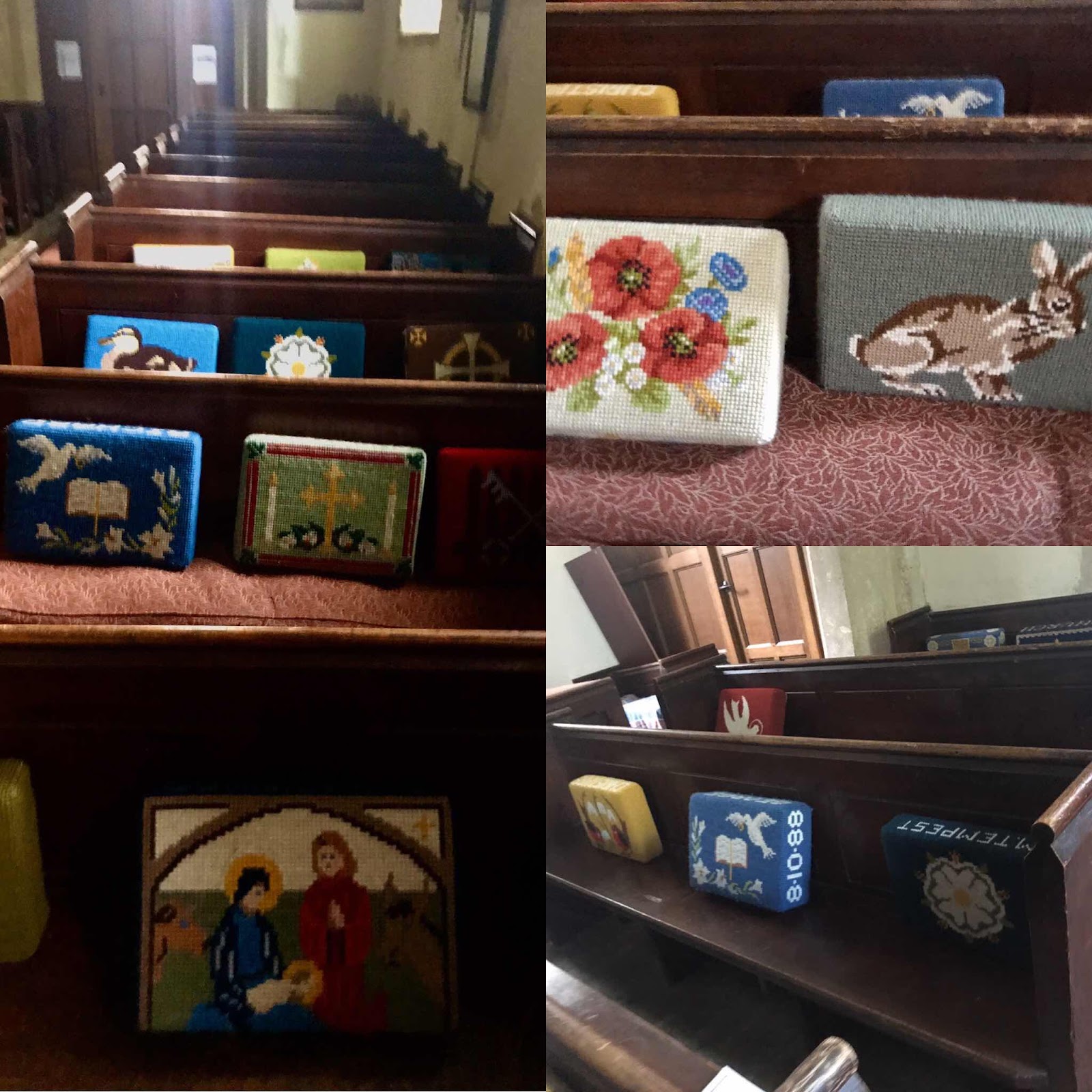
St Nicholas' has an impressive set of kneelers. There are some energetic needlepointers with excellent colour sense and design skills in this parish.
It is a simple, well maintained church, with a lovely section of parquet flooring.
Bell ringing is important, with evidence of success by the local team.

The church is evidently a hub for community matters. The Parish Matters newsletter covers issues from drain clearing to rural policing, events at the village hall. allotments and a Wonderful Villages photo competition.

Bell ringing is important, with evidence of success by the local team.
John Ray, my 5x GGrandfather was born in Piddington in 1709. He married Sarah Coxhead at St Mary Magdalene Beckley in 1736. Their 7 children were all born between 1737 and 1752 in Marsh Gibbon, 12 miles from Beckley, and 4.3 miles from Piddington.
 We arrived in Marsh Gibbon about 1.30 pm. The skies are still open, and there was more housing development than Piddington, although no evidence of local industry. Marsh Gibbon appears to be a bit of a hub, a role it seems to have played in the eighteenth century when my ancestors lived there as agricultural labourers .
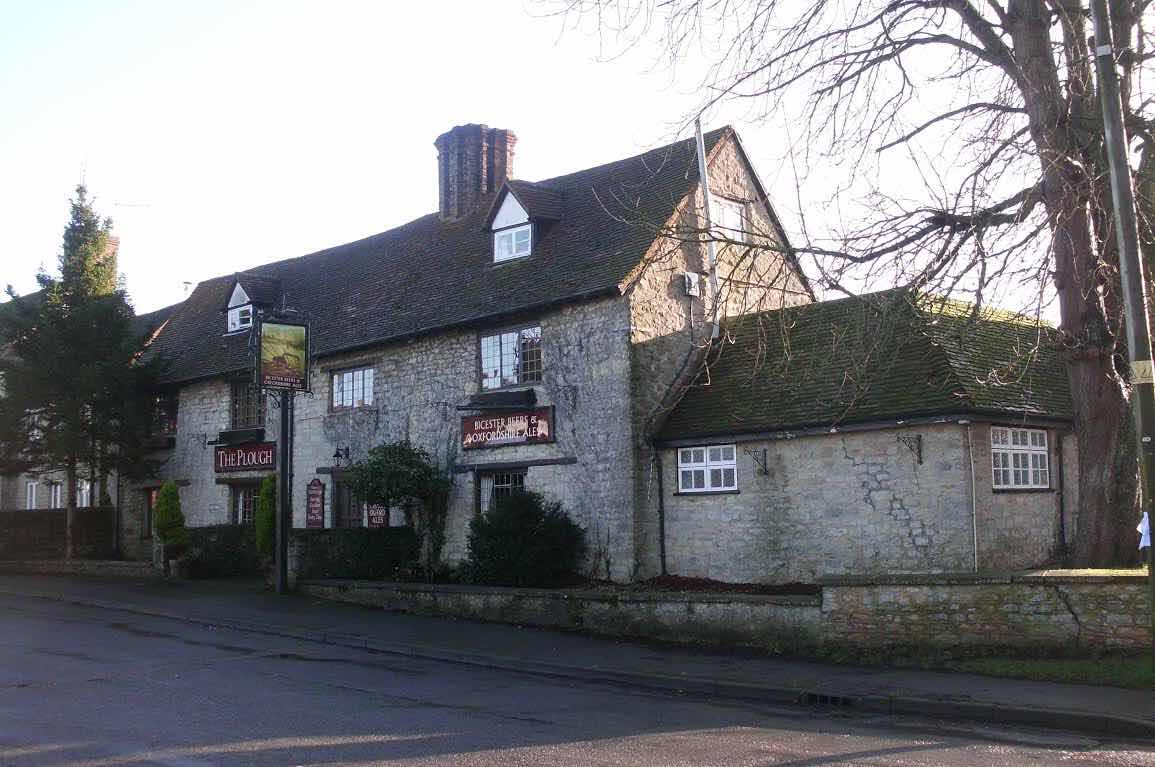
There are old farmhouse buildings and - to our relief, a pub.
 |
| From Plough Inn website. |
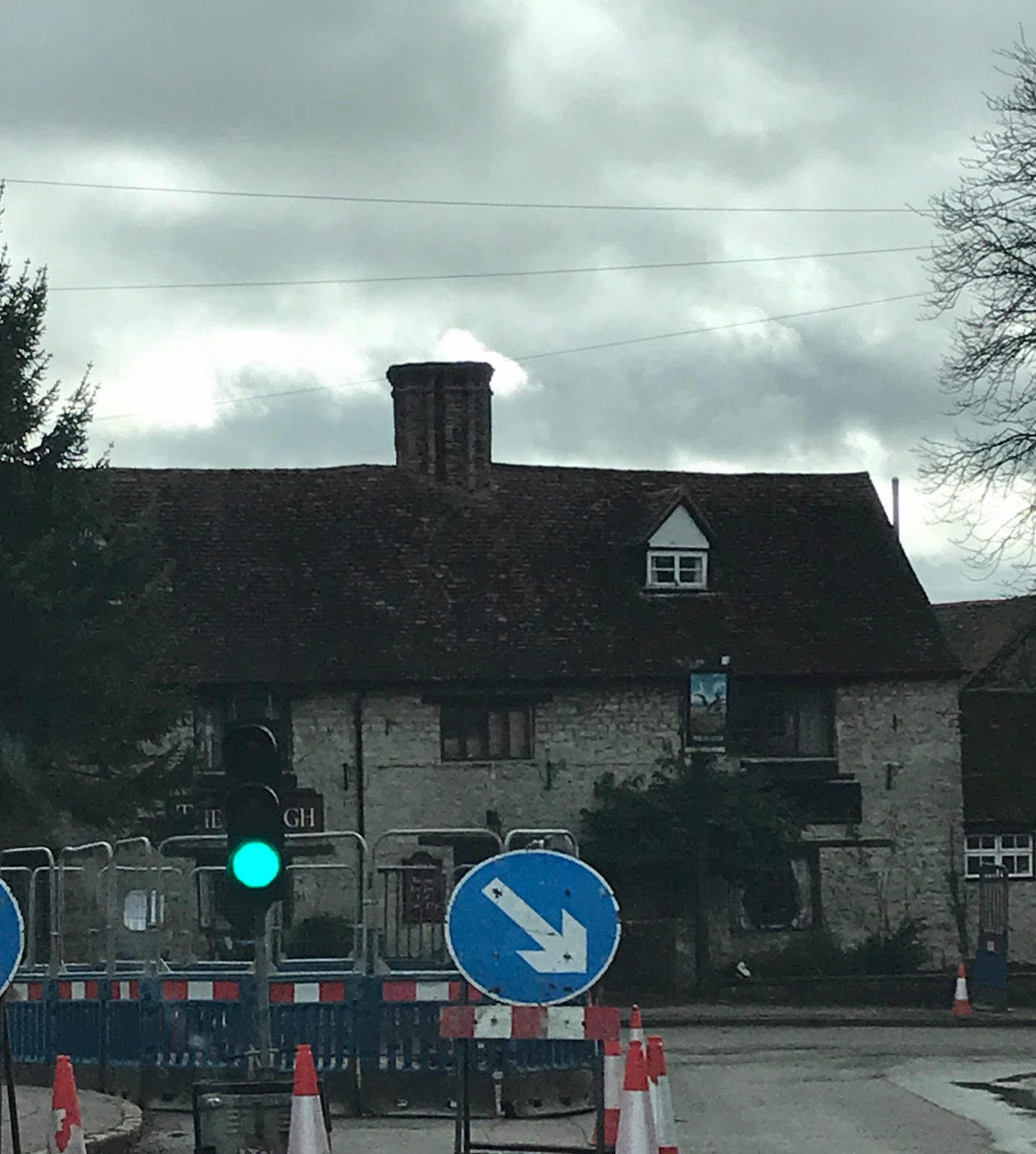
The Plough Inn was surrounded by roadworks. This did not prevent us entering, but did not make for a decent photo, so I have borrowed one from their website.

Inside a few locals were watching the Cheltenham races. The dog had what sounded like a cough (not a good sign in the current Covid19 crisis) but which the owner clearly regarded as an attention-seeking bark. As the dog eventually obeyed the owner's command to stop, she may have been right.
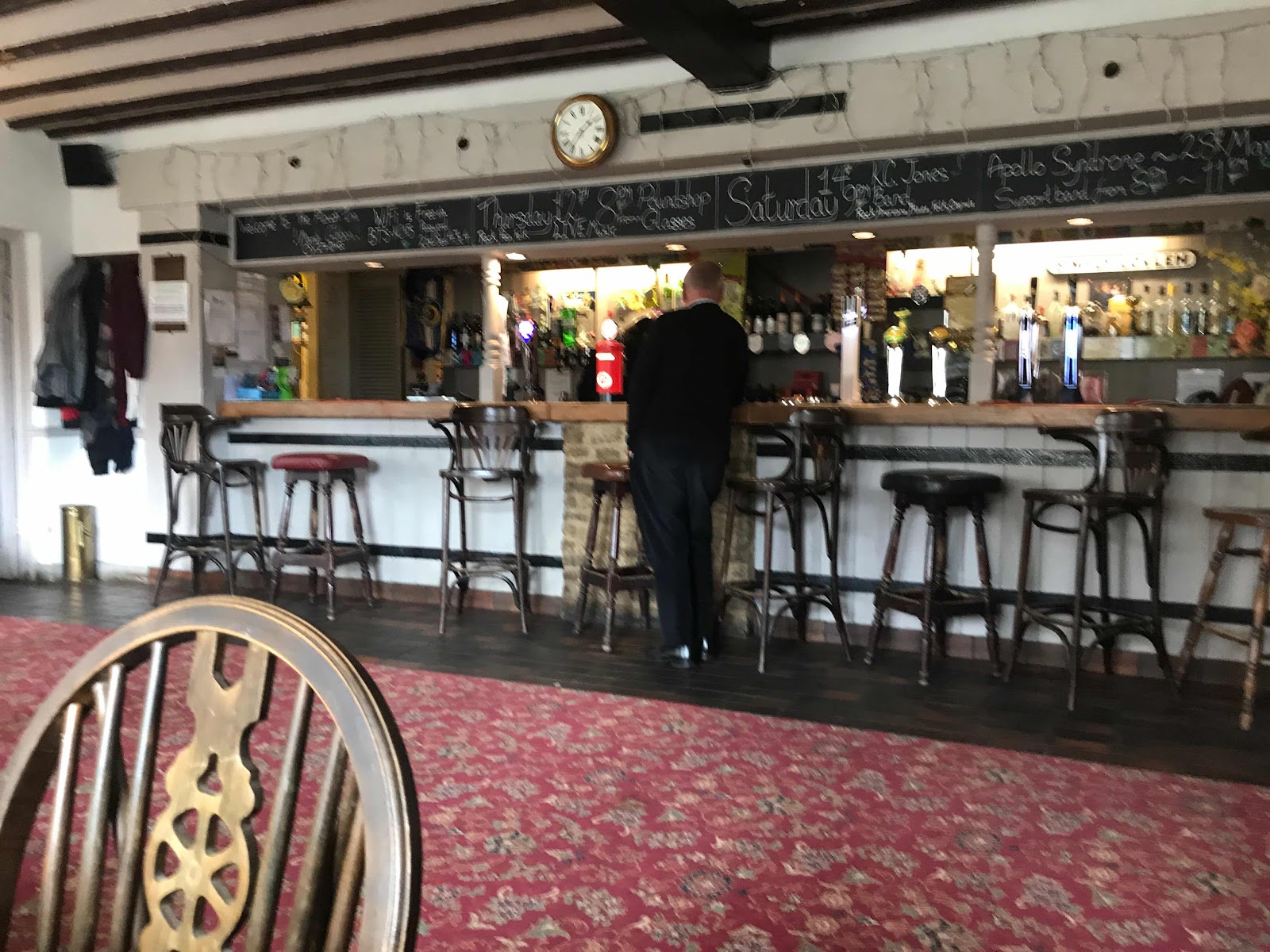
Eddie managed to organise sandwiches for our lunch and also a bowl of carrot soup for me.
The notices over the bar advertise live bands about once a month. There are also quizzes and Rugby-watching.
I forgot to ask someone to take a photo of us!
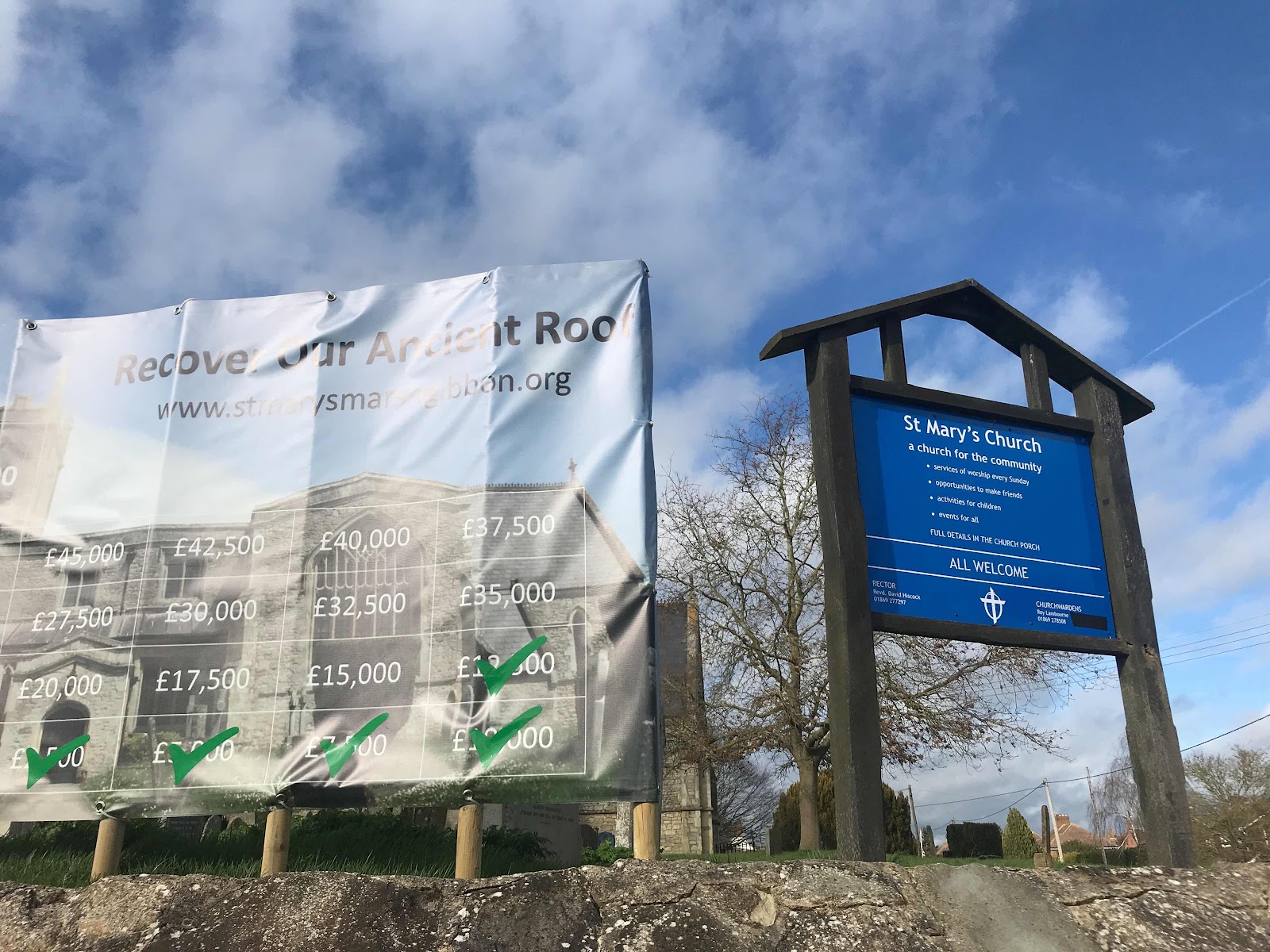
Across the road from the pub, St Mary the Virgin Marsh Gibbon is trying hard to raise the 45,000 necessary to fix the church roof.
The need for this was very obvious once we were inside. There is a loud noise of wind under the roof slates and daylight through some of them.
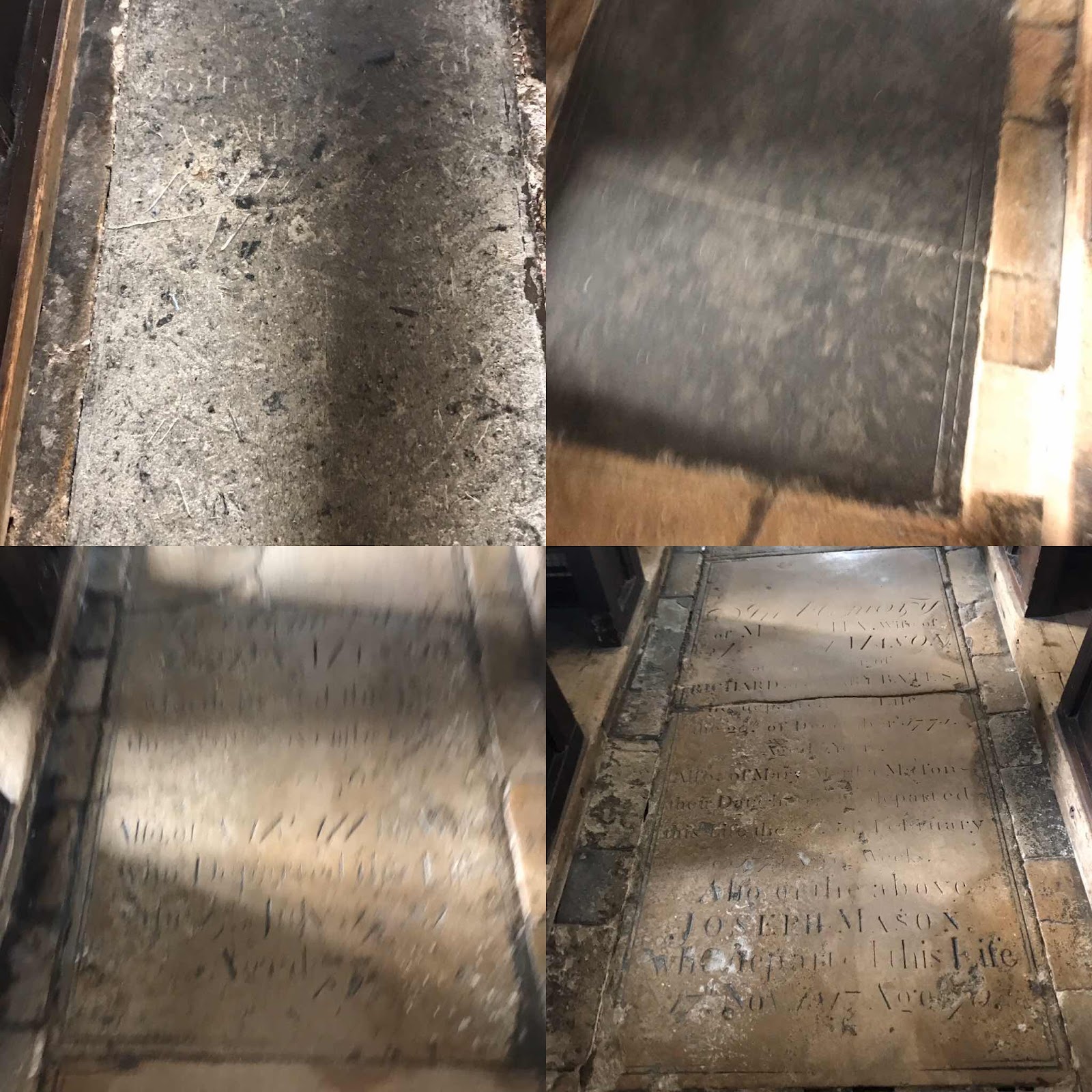
 The present building dates from the 13th century, although there was a church on the site long before that.
It has been continuously renovated in almost every century, with windows and arches being moved and reused as aisles were widened, windows and storage added.
 The bells were cast by Richard Chandler in 1678 with the exception of the tenor bell which was cast in 1854. Again, bell-ringing is evidently a popular activity.
The interior is smaller that we anticipated from looking at the outside.
 Some of the The kneelers are older, simpler and more worn than those at Piddlington,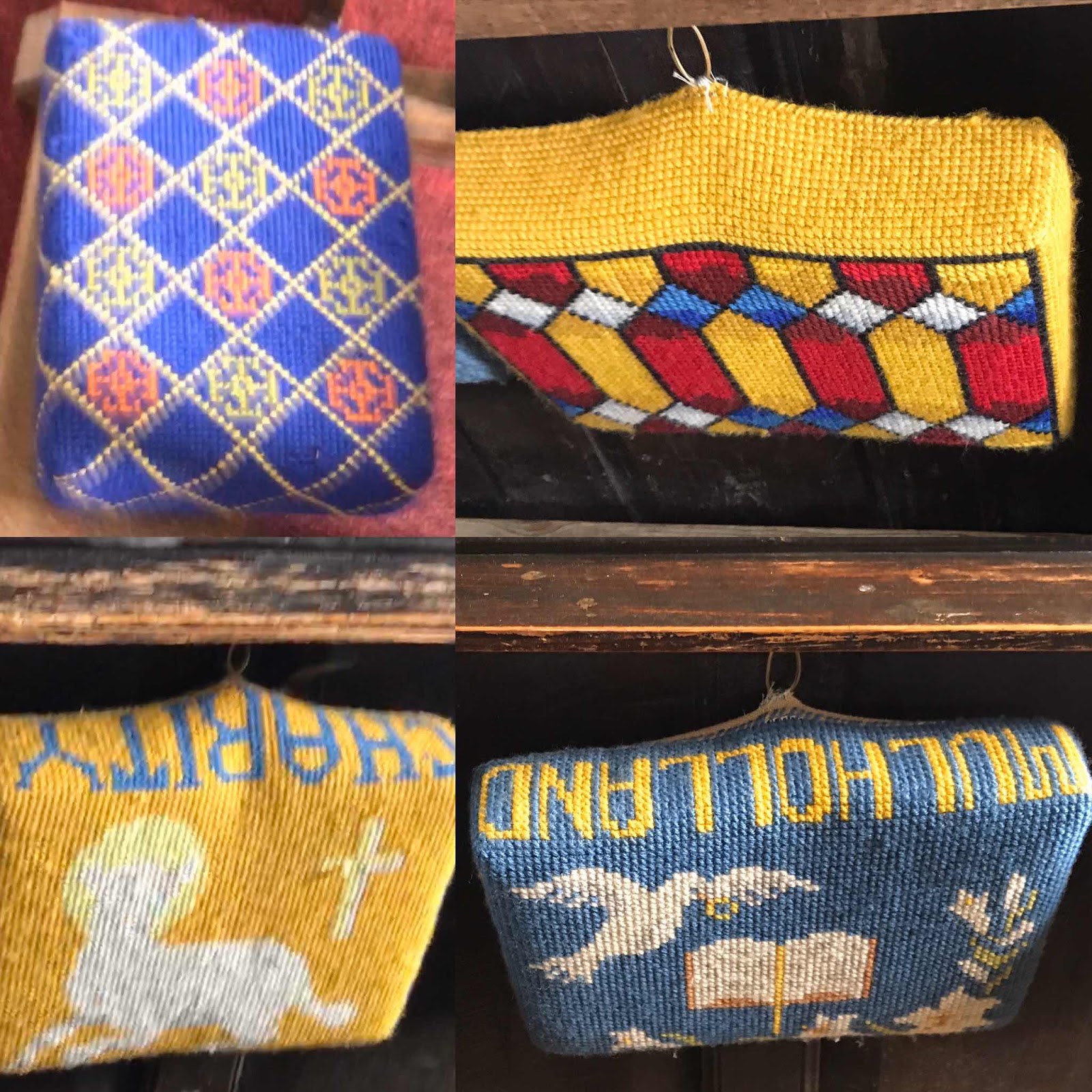
but there are also some that are newer and bolder in design and colour.
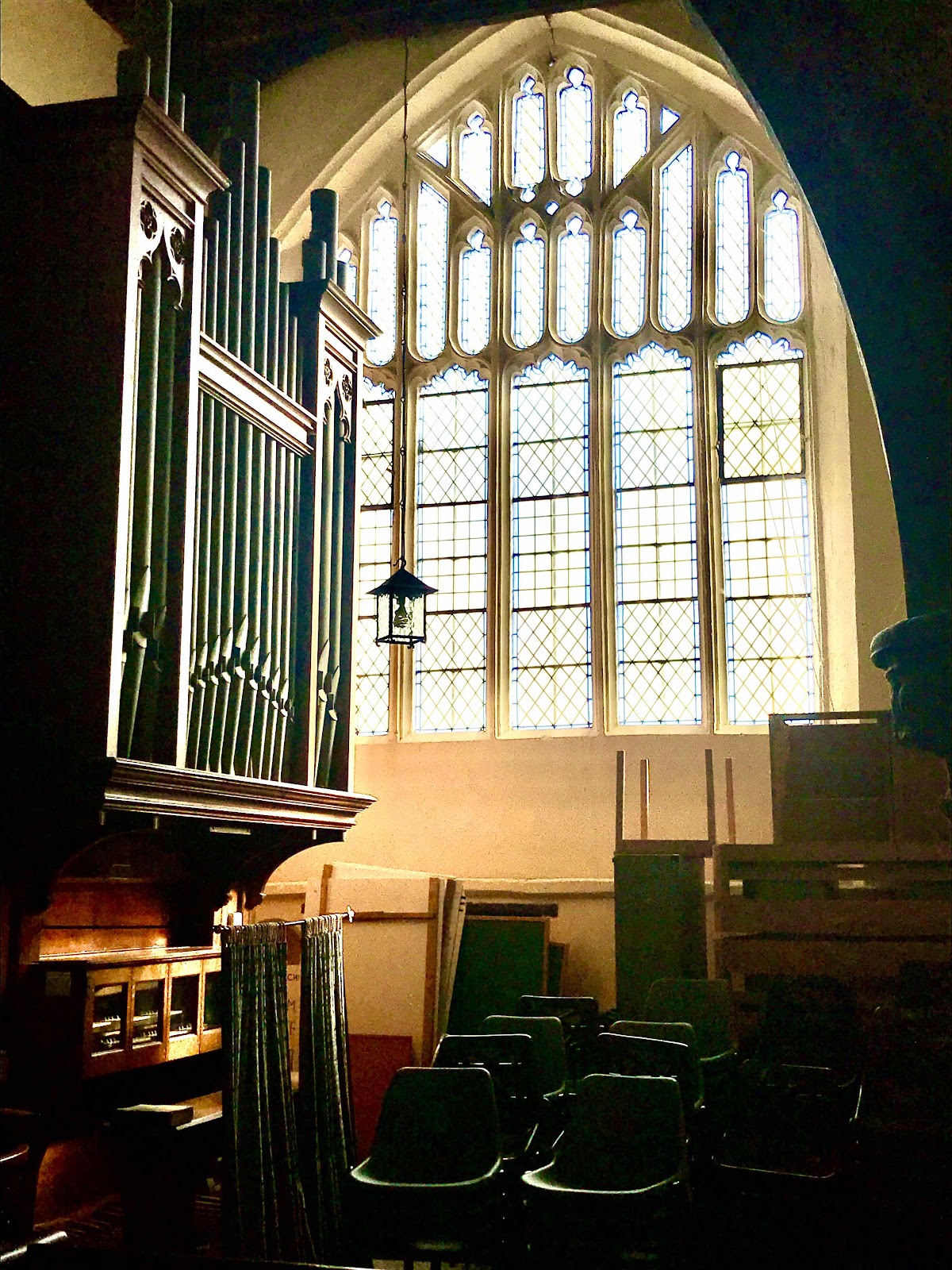
There is a lovely South transept window and organ.

 The reredos of the Last Supper at the back of the altar was carved from a single piece of limestone in 1892 by F.C. Lees.
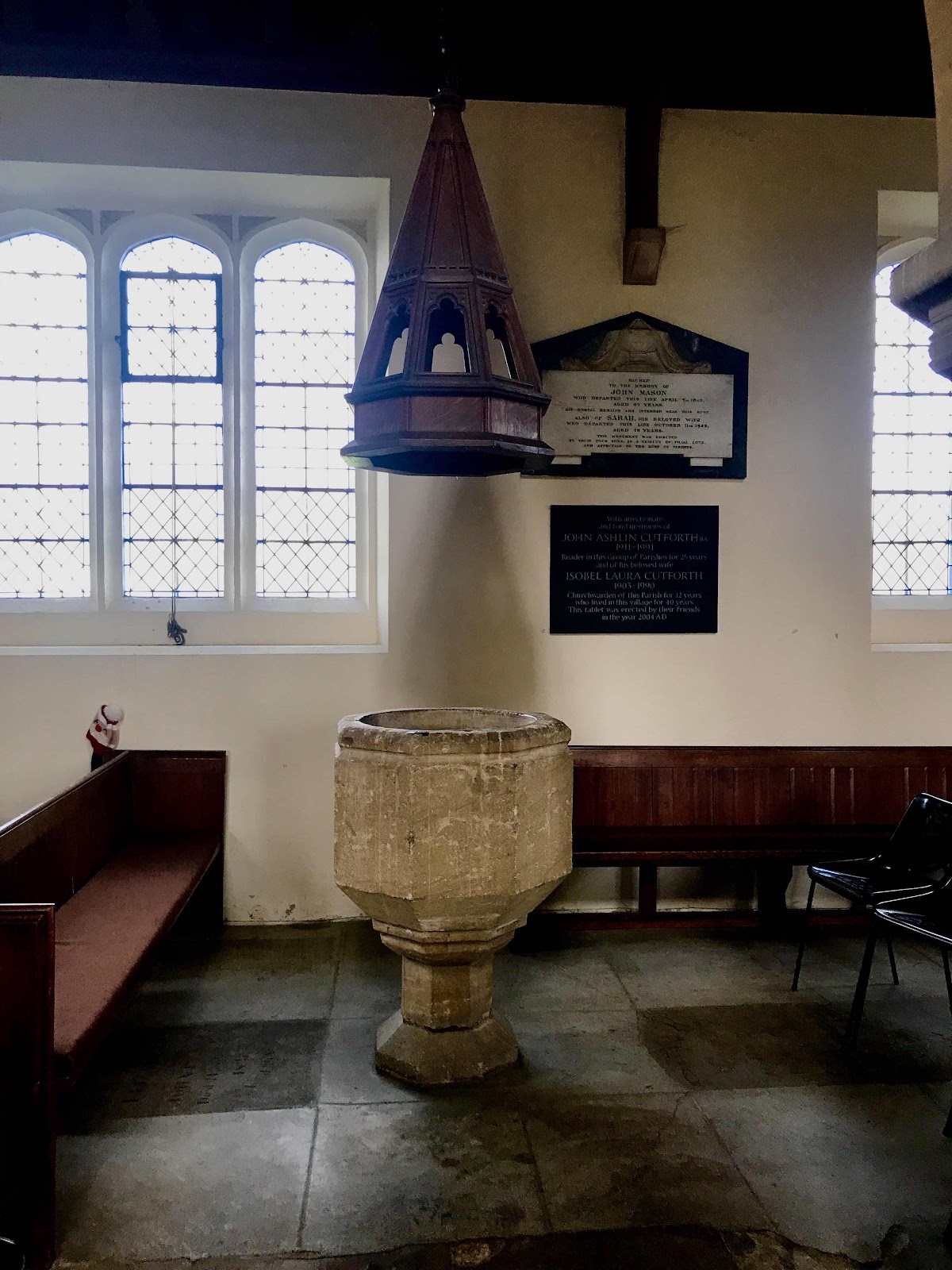 The font appears to be the same that was used to baptise the seven children of John Ray and Sarah Coxhead. John, my 4xGGrandfather was certainly baptised here in 1749.
The church yard has a decent collection of yew trees, and abuts Manor Farm. The town does not have a manor house, the Manor Farm appearing to be the largest and most impressive dwelling in the village and right on the church boundary. The graveyard is far from overcrowded.
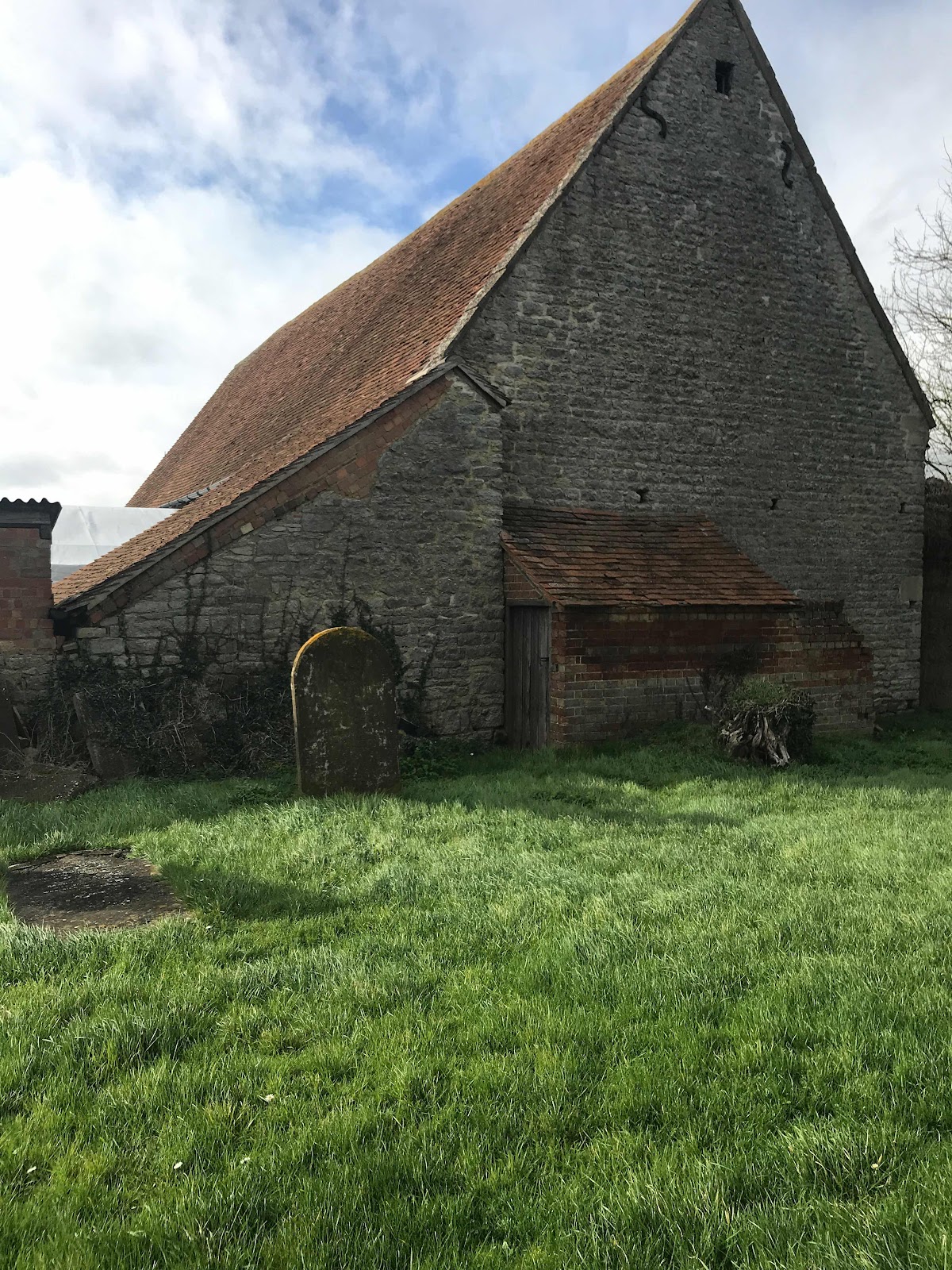
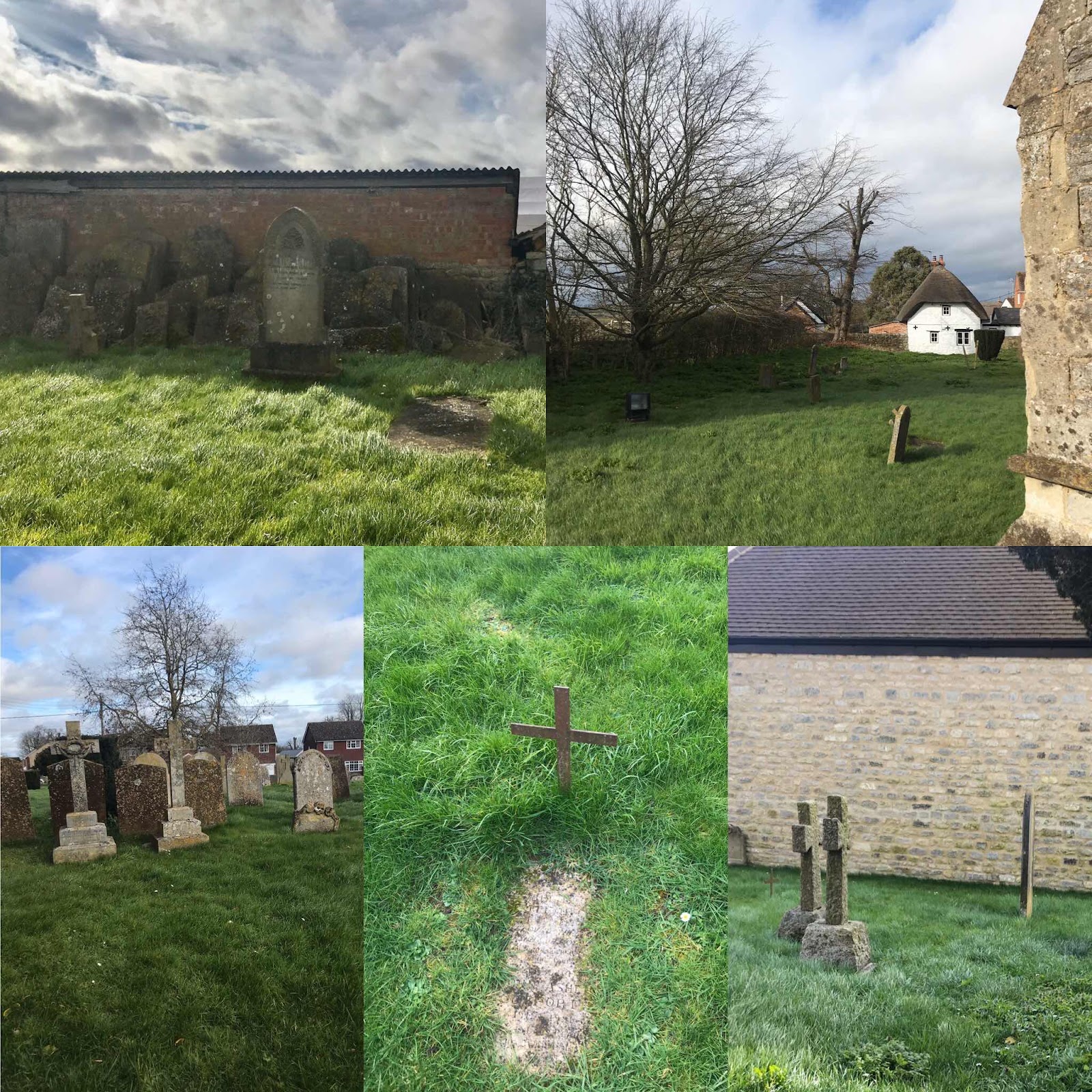
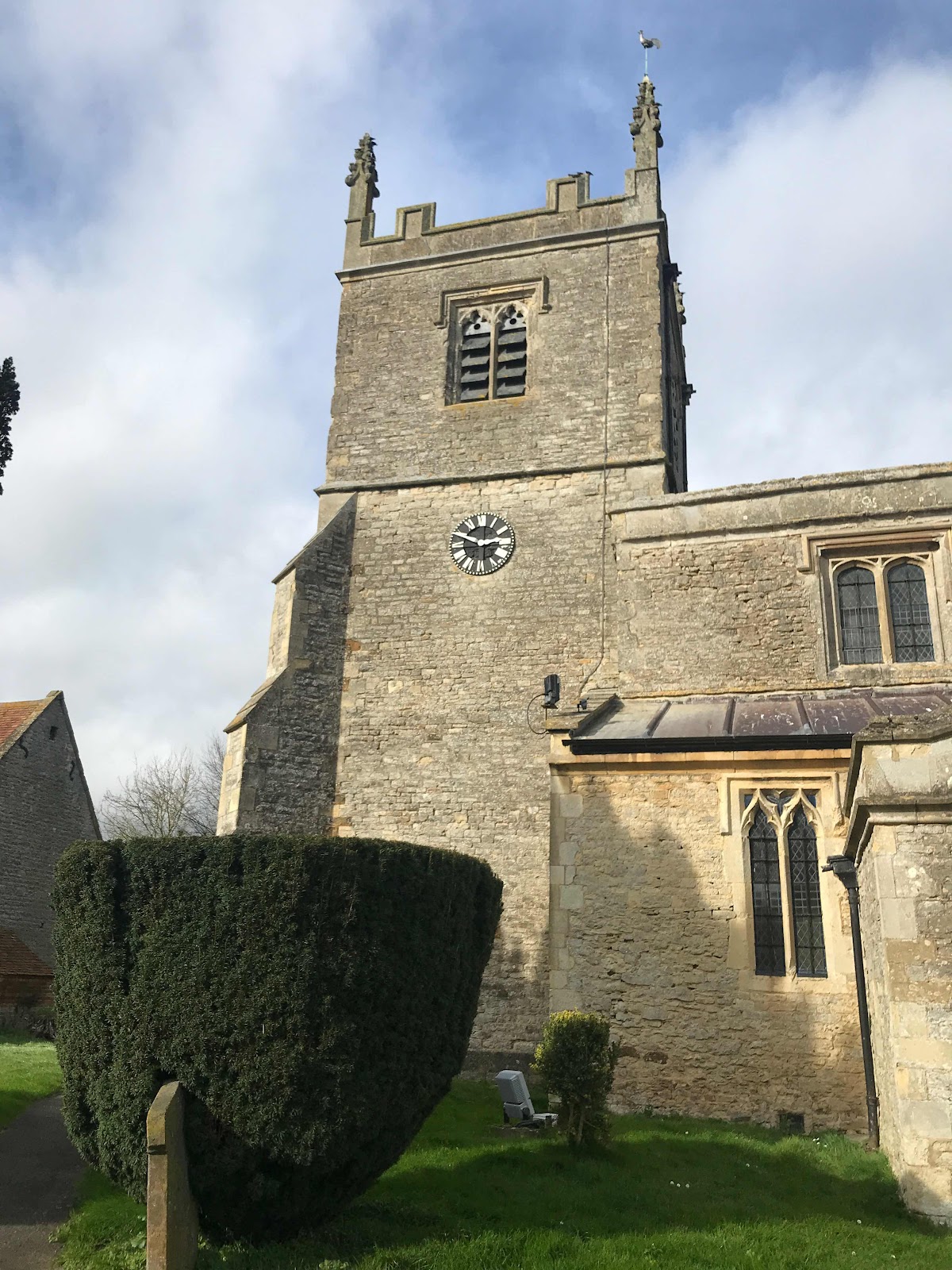

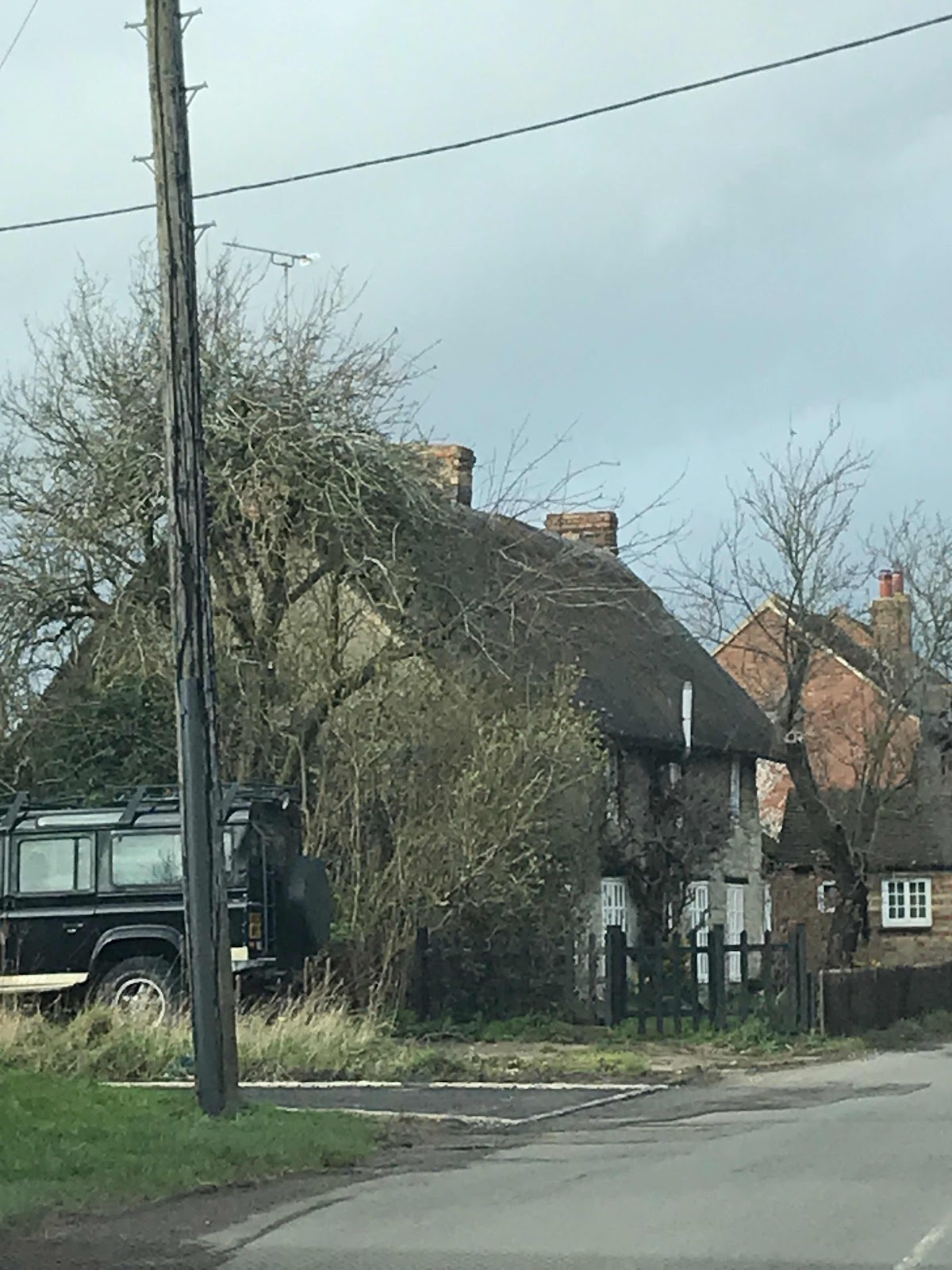 As we leave Marsh Gibbon in the early afternoon, there is still water lying around.
John Ray, my ancestor baptised in Marsh Gibbon in 1749, marries Mary Pangston in Twyford on 21 June 1773. Mary is from Charndon and the couple in Twyford and Chearsley. In April 1806 John is charged with stealing a rail fence but is discharged by proclamation!
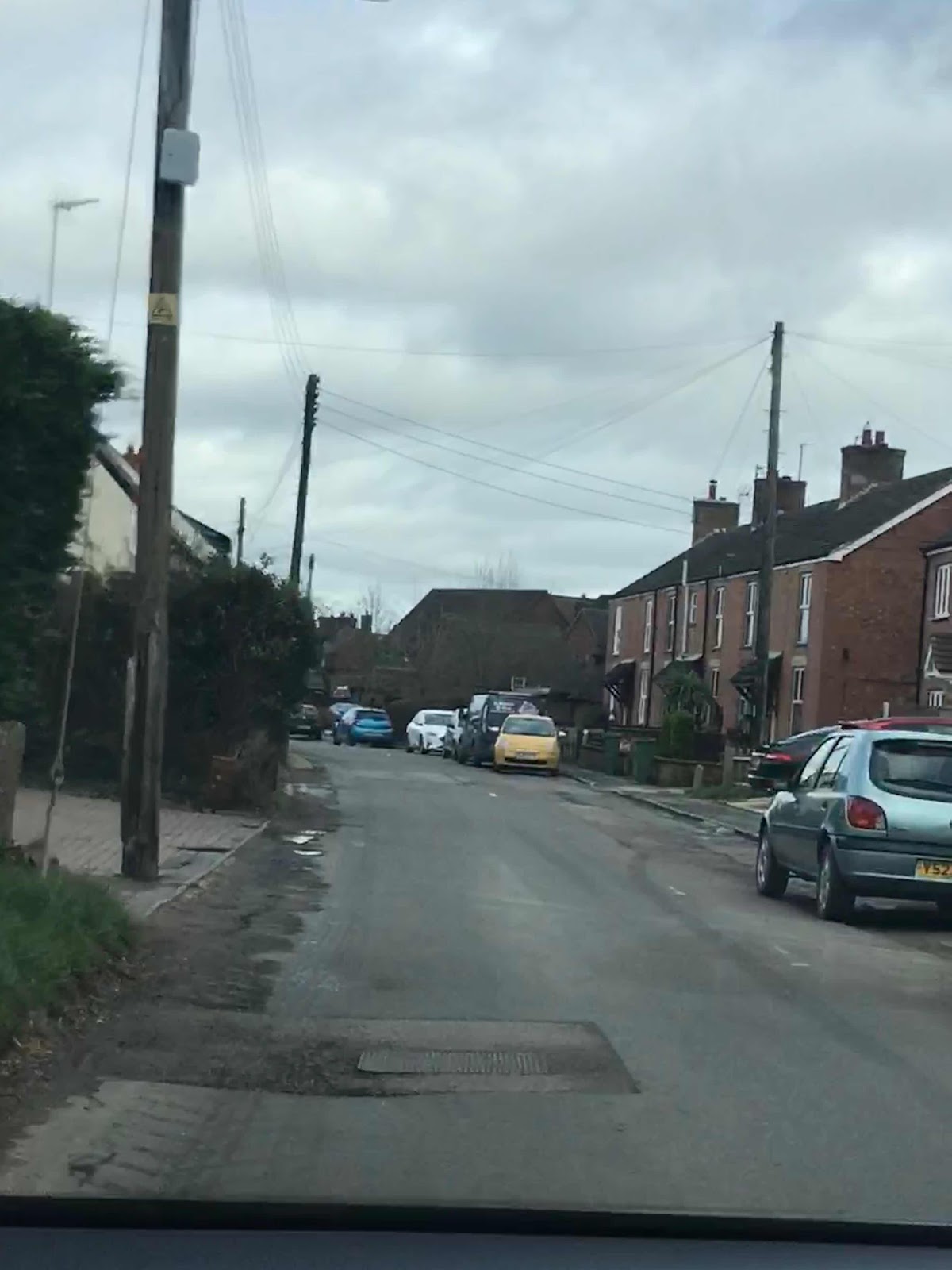
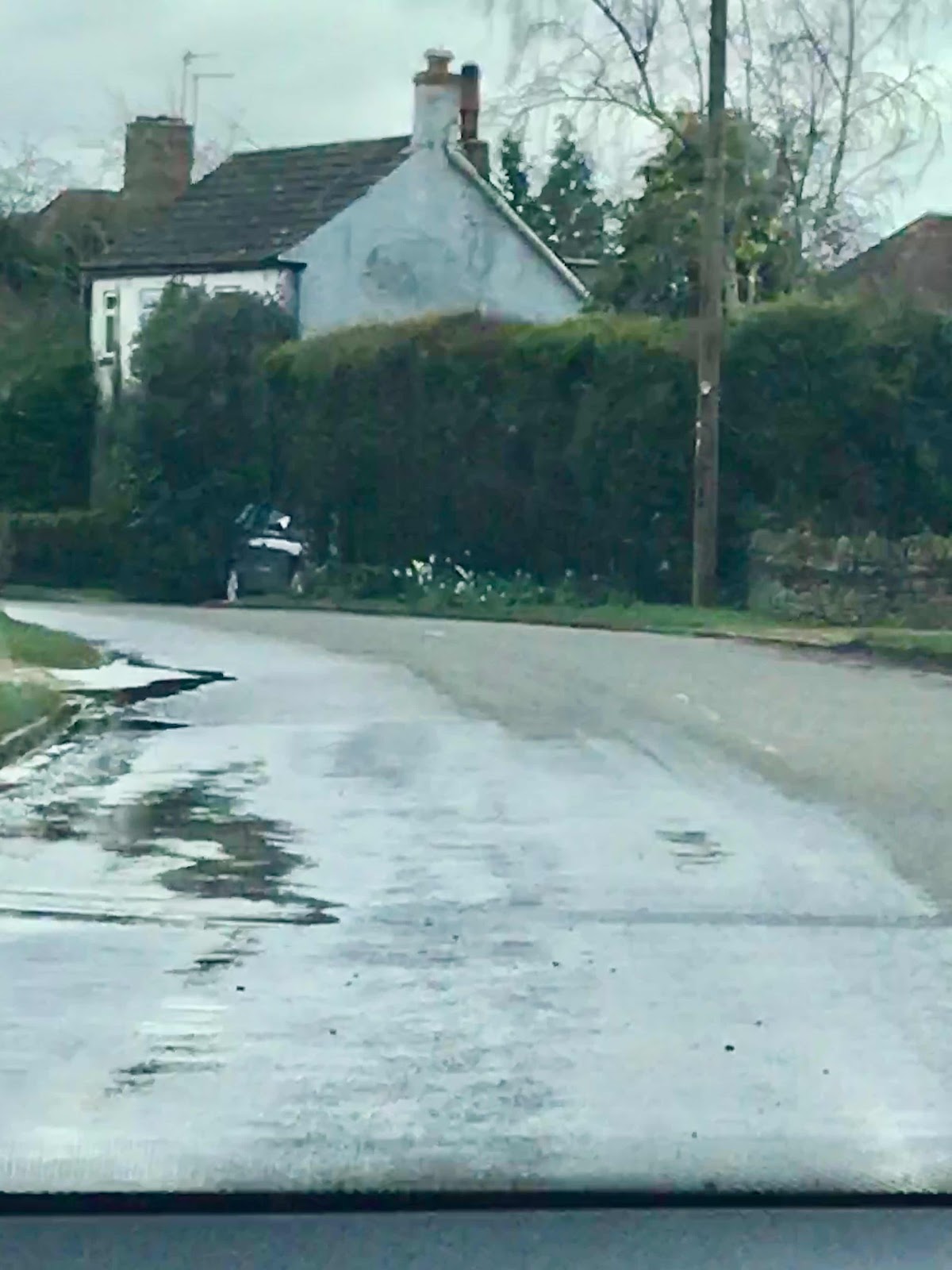 Twyford , as we enter is pleasant, quiet, and still through wet streets. Twyford is a railway town.
Robert Ray, my 3xGGrandfather, was born in Twyford in 1793. His father was 44 and his mother 41. In 1818, at the age of 25, he married Mary Susanna Tue at the Church of the Assumption of the Blessed Virgin Mary in Twyford.
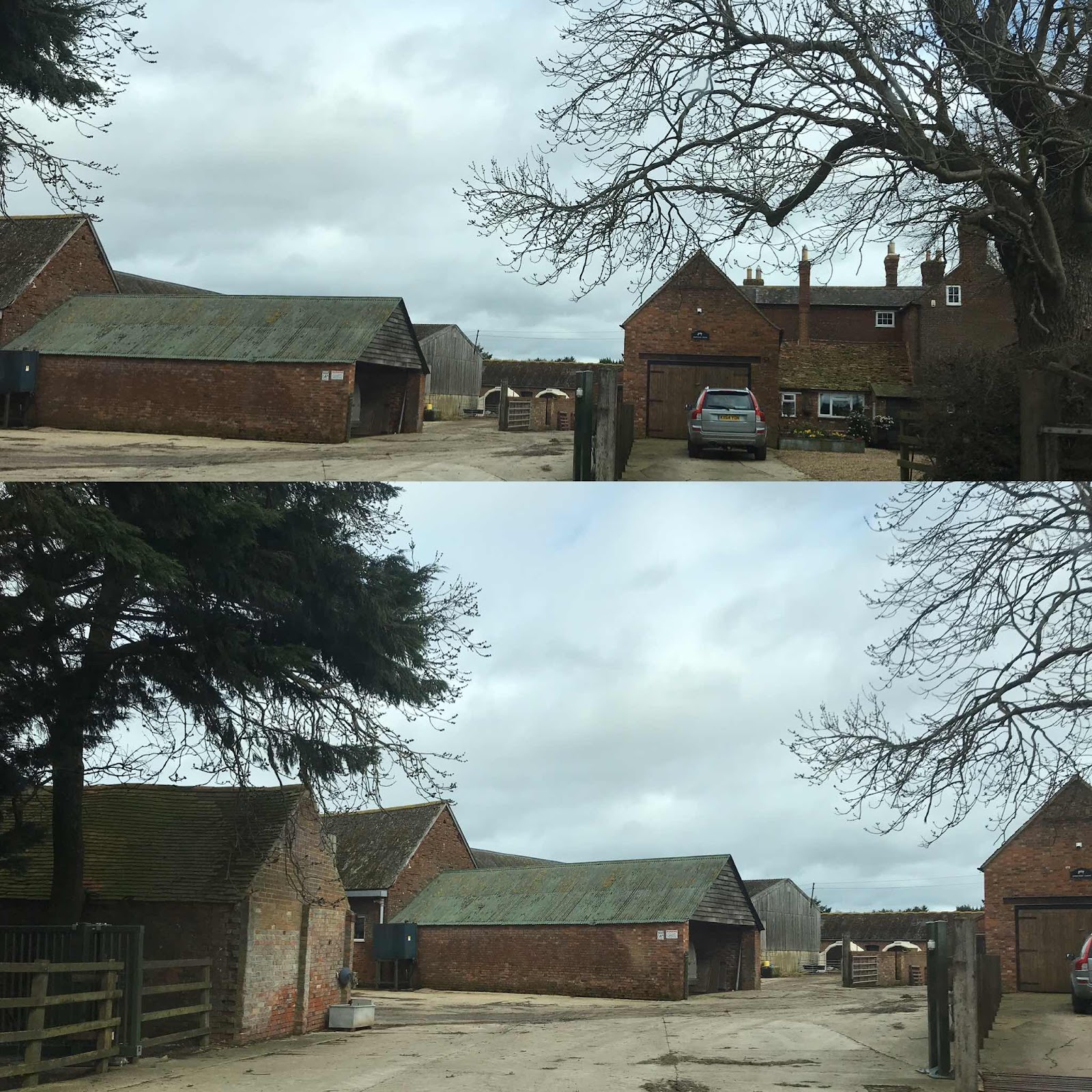
This large farm with abundant hay, is on the border of Charndon and Twyford. Called Hill Farm, it would not surprise me if the wooden name board on the tree
at the gate had not been familiar to Robert and Mary!
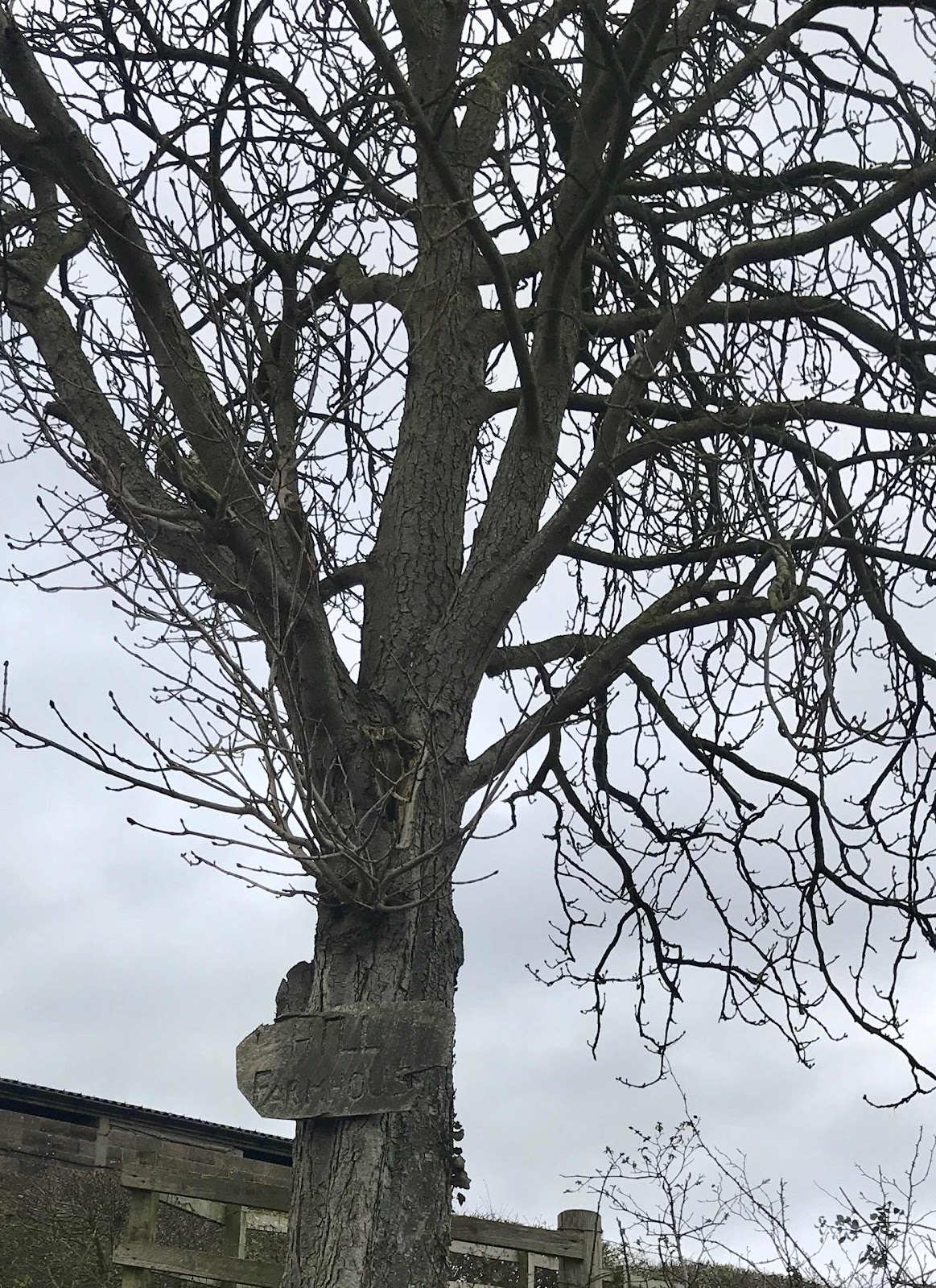

Their 9 children were born in Charndon.
They lived there until their death, Mary Susannah in 1856, aged 61 and Robert in 1877 aged 84. By this time, enclosures had taken their toll on the livelihood of agricultural labourers. Robert died a pauper.
To make ends meet, at least 17 of the women in Robert and Mary's extended family in the villages of Charndon, Chearsley and Marsh Gibbon were lacemakers in the nineteenth century: Susannah, Ann, Fanny, Mary, and two Sarah Rays, Rebecca, Martha and Mary Ann Lamburn, Ann, Mary and Martha Parker, Sarah and Elizabeth Badrick, Rosa Briscoe,Mary North and Anne Neary. Some of them were 8 years old when appearing as lace-maker on the census.
Charndon has what appears to be an old village green surrounded by large old houses.
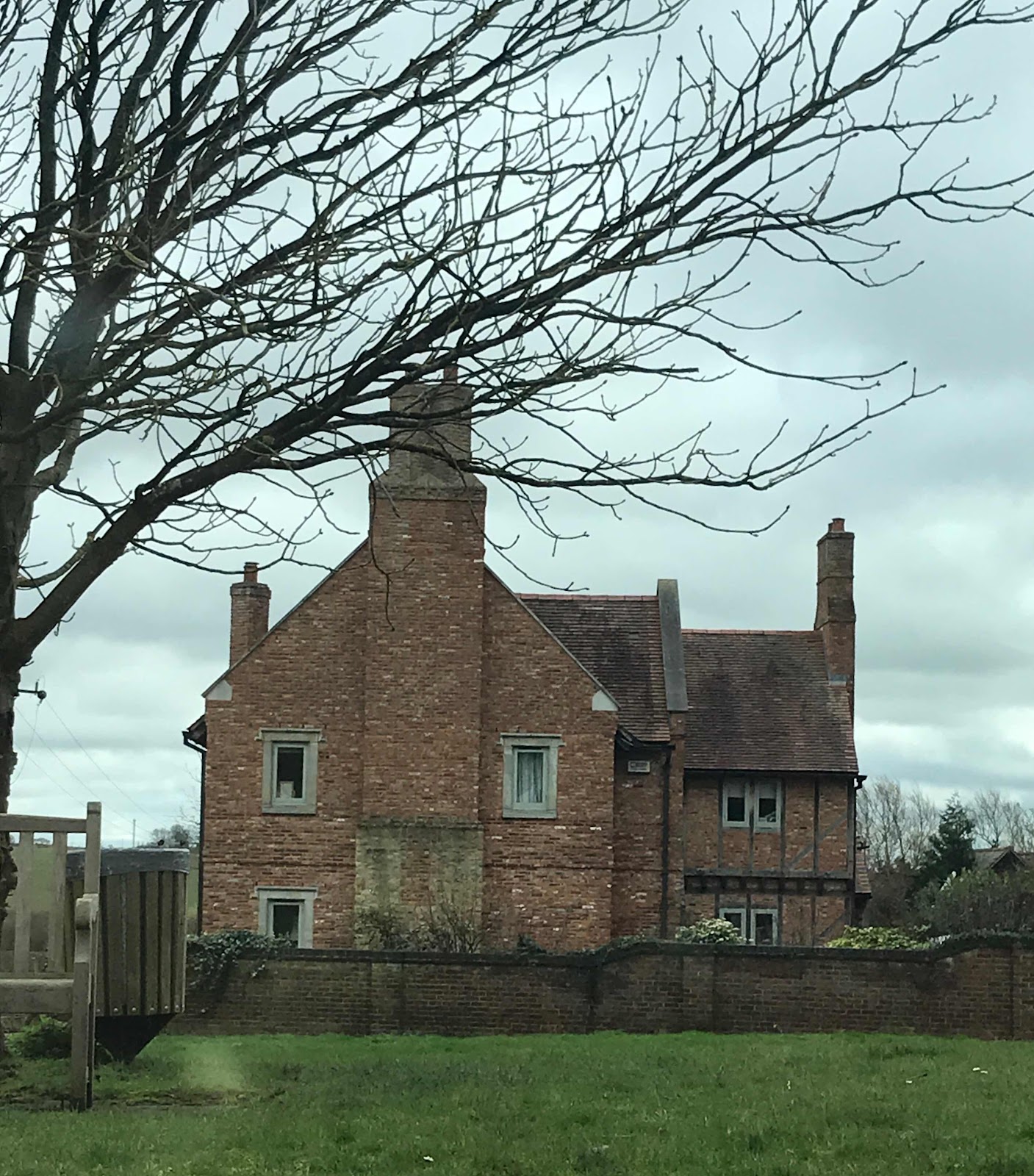
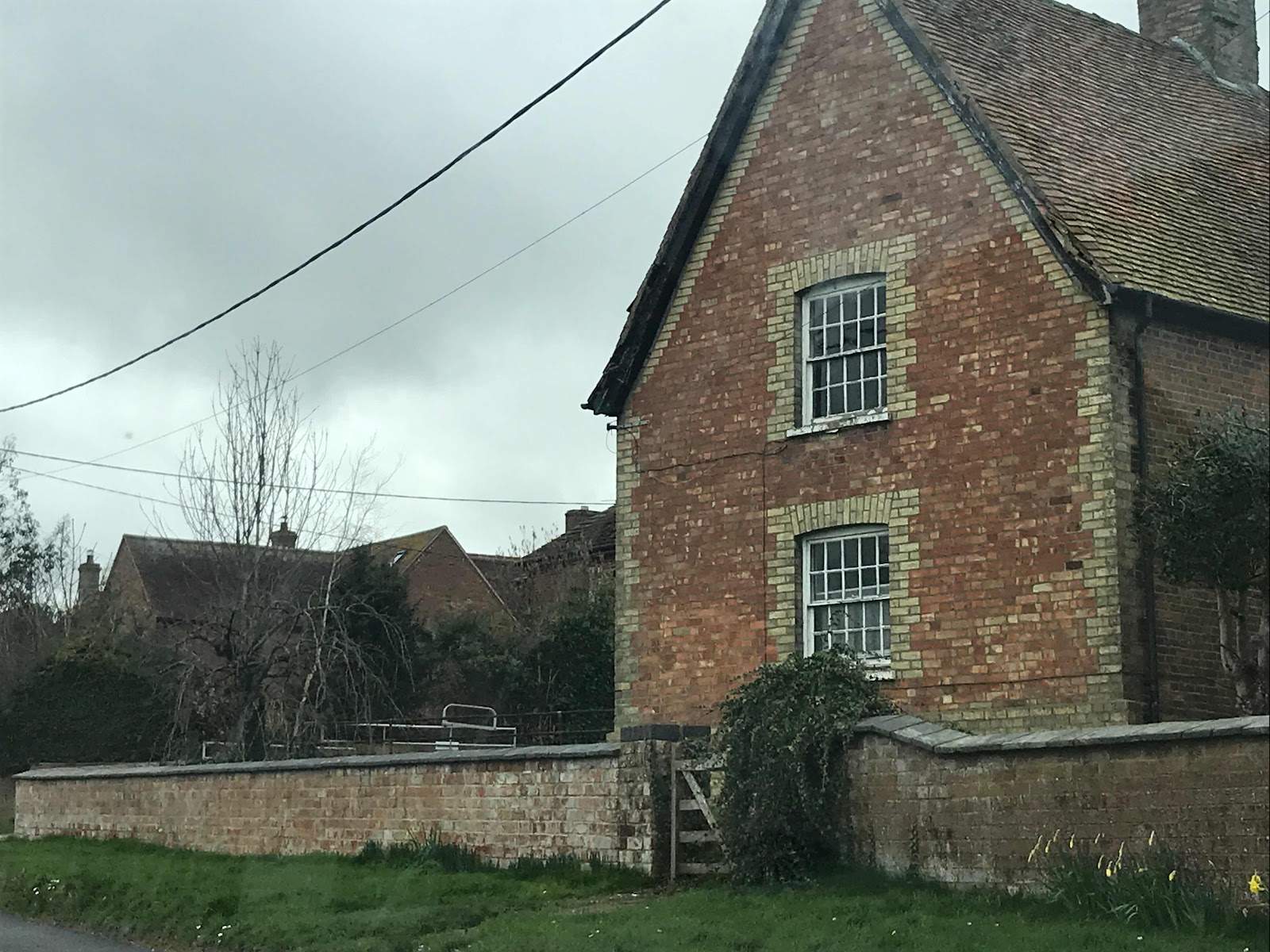
Since then housing estates have sprung up on land no double worked and walked on by Mary, Robert and their children.
Their eldest son, Thomas, born in 1819, was my 2xGGrandfather. He was baptised in Twyford, presumably the closest church. In 1840 he married Susannah Howes at the Church of the Assumption of the Blessed Virgin Mary in Twyford. They lived in Chardon until 1845, before moving to Iver Buckinghamshire in 1846 where they worked as servants - very likely at the nearby Eton School.
To round off the story, after Susannah died in 1858, leaving 7 children, Thomas married again later the same year. He and his second wife Eliza Johnson had another 5 children, the youngest of whom, Albert Edward Ray was my Great Grandfather. By 1861 Thomas was a green-grocer in Iver, from where he began to make and sell ginger beer. He moved to Hillingdon in 1862 and established a mineral water business in which both my grandfather and great-grandfather worked. The enclosures had put an end to the life of agricultural labourers.

We, however, left the pilgrimage in the Ray Valley, and drove back to Stratford gradually leaving the open skies and marshy ground behind us.
For me it was a wonderful day discovering the landscape of my ancestors in the company of Christine and Eddy for whom no request or trail was too much bother. I feel really privileged to have had this opportunity. I was surprised by the closeness of the villages and the consistency of the landscape.
Christine, Eddie and I enjoyed catching up, picking up much where we left off last year. I am grateful for their generosity, company, knowledge - not to mention Eddy's driving.
My only regret is that I didn't get someone to take that photo for me!